
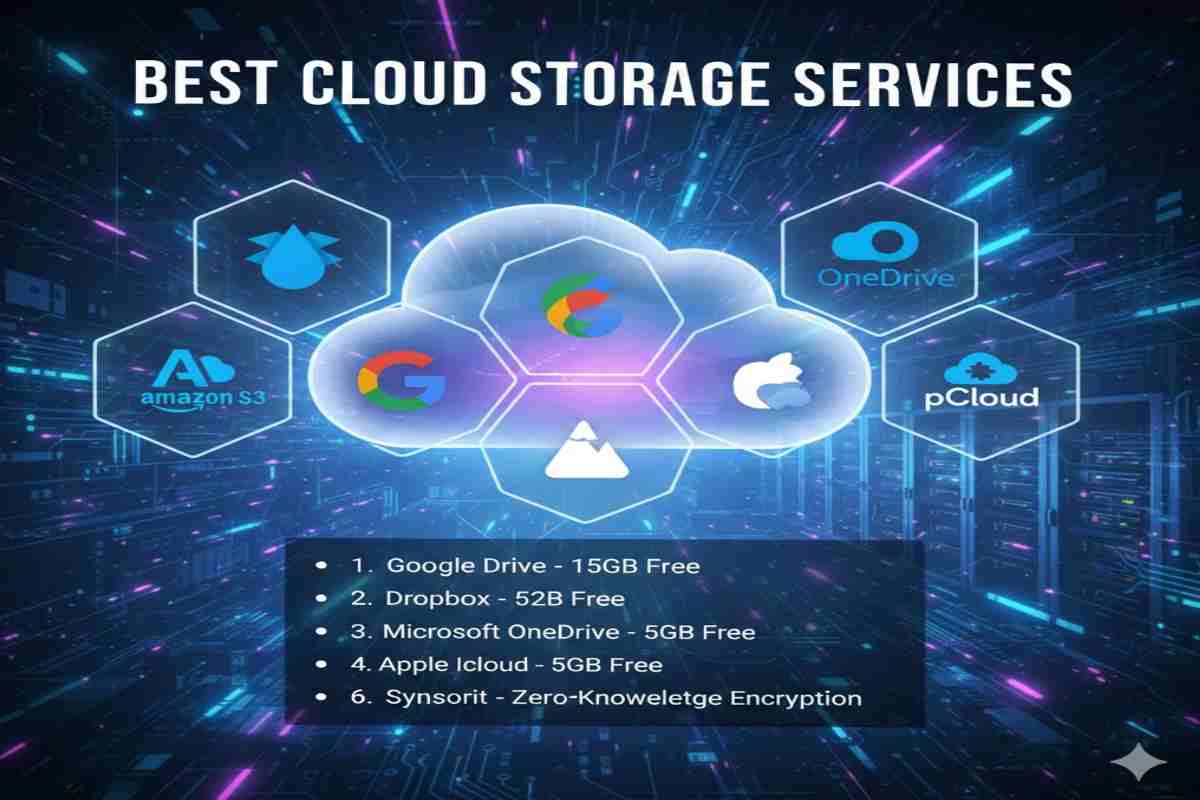

There is no single “best” cloud storage service—only the best one for how you store, access, protect, and scale your data over time.
Most people search for the best cloud storage services expecting a simple winner. That’s the problem. The wrong choice can lock you into the wrong ecosystem, expose private files, or cost far more over time than expected. The solution is not another generic top-10 list it’s choosing cloud storage based on how you actually use your data.
Direct answer: the best cloud storage service depends on whether you prioritize convenience, privacy, backups, collaboration, or long-term value.
Key Takeaways
- “Best cloud storage” is use-case dependent, not universal.
- Backup, sync, and collaboration solve different problems.
- Privacy-first storage limits provider access—but reduces convenience.
- Free plans are starting points, not long-term solutions.
- Switching providers later can be painful and expensive.
Why “Best Cloud Storage” Is the Wrong Question
Most comparison pages treat cloud storage like a commodity. In reality, it’s a long-term infrastructure decision. Once your files, photos, and workflows live inside one ecosystem, moving out becomes slow, risky, and frustrating.
What do I expect this cloud storage to do for me over the next 3–5 years?
Cloud Storage Basics
Cloud storage generally falls into three functional categories:
- Sync-focused storage: Keeps files identical across devices.
- Backup-focused storage: Protects against data loss, ransomware, and mistakes.
- Collaboration-focused storage: Enables sharing, permissions, and live editing.
Many services overlap—but none excel equally at all three.
Source: AppAnatomy
How We Evaluated the Best Cloud Storage Services
This guide compares platforms using:
- Security & encryption model (standard vs zero-knowledge)
- Pricing logic (free, subscription, lifetime)
- Ease of use
- Performance & reliability
- Ecosystem & integrations
- Scalability (personal → business)
Authoritative benchmarks and practices referenced from organizations like NIST, EFF, and ENISA where encryption and data protection are discussed.
Best Cloud Storage Services by Use Case
Best Overall for Most Users
Google Drive
Google Drive offers the smoothest experience for everyday storage, collaboration, and productivity.
Best for: documents, photos, teamwork
Not ideal if: you require zero-knowledge privacy
Best for Privacy & Security
Sync.com
Sync.com uses true end-to-end encryption. Even the provider cannot access your files.
Best for: sensitive personal or professional data
Not ideal if: you rely heavily on third-party integrations
Best for Backup & Multi-Device Protection
IDrive
IDrive combines backup and cloud storage, supporting unlimited devices.
Best for: full device protection, ransomware recovery
Not ideal if: you want a modern, minimal interface
Best Free Cloud Storage
MEGA
MEGA offers a generous free tier with encryption by default.
Best for: privacy-conscious users on a budget
Not ideal if: collaboration is critical
Best Lifetime & Long-Term Value
pCloud
pCloud’s lifetime plans change the economics of cloud storage.
Best for: long-term planners, media storage
Not ideal if: you want built-in zero-knowledge encryption without add-ons
Best for Business & Compliance
Box
Box focuses on compliance, permissions, and auditability.
Best for: regulated industries, teams
Not ideal if: you’re a solo or casual user
Best for Apple Users
iCloud Drive
iCloud Drive integrates seamlessly with Apple devices.
Best for: Apple-only environments
Not ideal if: you use Windows or Android heavily
Choose This If… (Quick Decision Guide)
- Choose Google Drive if convenience and collaboration matter most.
- Choose Sync.com if privacy outweighs everything else.
- Choose IDrive if backups are your priority.
- Choose pCloud if you want long-term value.
- Choose Box if compliance and control are essential.
Common Cloud Storage Mistakes
- Paying for space you never use
- Ignoring data migration difficulty
- Assuming large brands equal better privacy
Conclusion
The best cloud storage service is not the most popular one—it’s the one aligned with your data behavior, risk tolerance, and long-term plans. Choose intentionally, and cloud storage becomes an asset instead of a liability.
Author Trust Note (E-E-A-T)
Written using a comparative framework informed by SaaS research, security best practices, and long-term platform analysis rather than affiliate-driven rankings.
Source: CyberAltitude
FAQs
What is the best cloud storage service overall?There is no single best option. The right service depends on whether you value convenience, privacy, backups, or collaboration most.
Is cloud storage safe for personal data?Yes, if you choose reputable providers and understand their encryption model. Zero-knowledge services offer the highest privacy.
What is the safest cloud storage service?Privacy-first providers with end-to-end encryption are generally safest because only you control access.
Are free cloud storage plans worth using?They’re useful for testing but rarely sufficient long-term. Most users outgrow them quickly.
Is paid cloud storage worth it?Yes, if your data has personal, professional, or financial value. Paid plans offer better security and reliability.
What’s the difference between cloud storage and cloud backup?Storage focuses on access and syncing. Backup focuses on recovery and protection from data loss.
Can I use more than one cloud storage service?Yes. Many users combine convenience-focused and privacy-focused services.
Which cloud storage is best for business use?Business-oriented platforms with admin controls and compliance features are best for teams.
What should I avoid when choosing cloud storage?Avoid choosing based only on free space or brand name. Long-term fit matters more.
Does cloud storage differ by country or region?Yes. Data protection laws differ between regions like the US and EU, which can affect storage choices.