
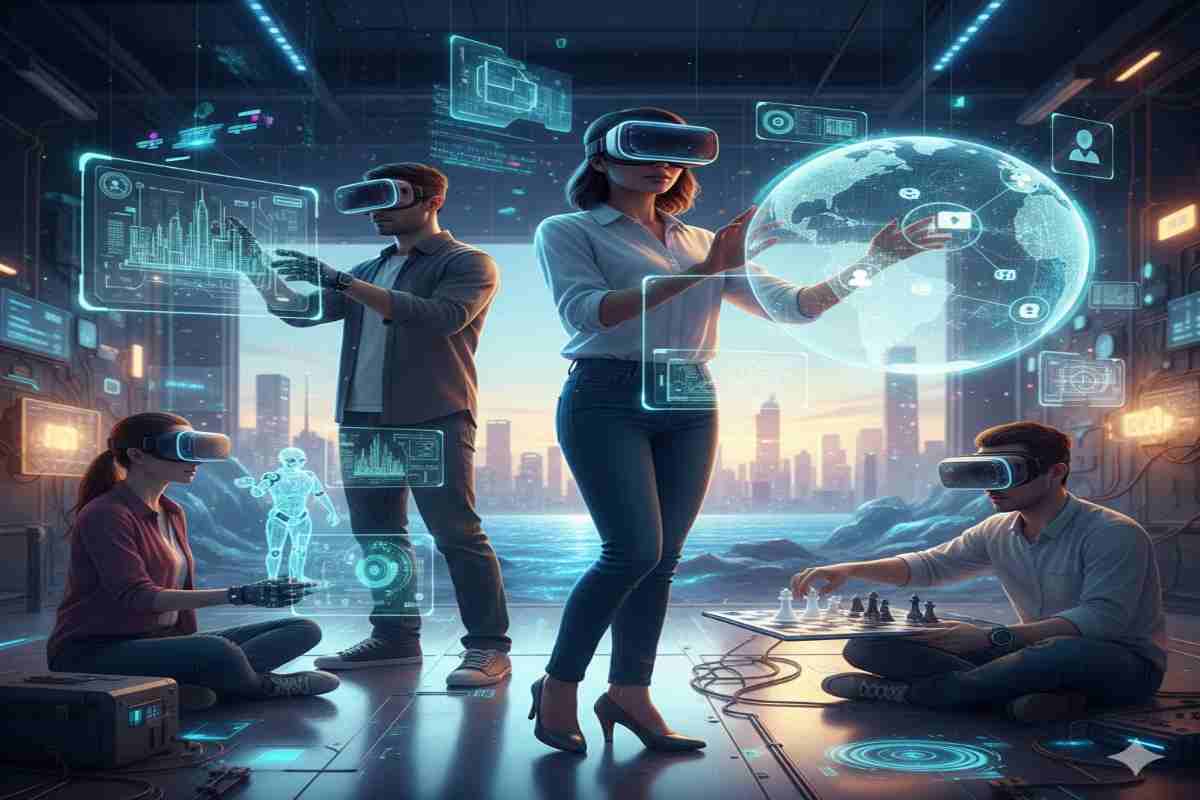

Metaverse technology is not a single product or virtual world—it is an evolving stack of immersive technologies that will reshape how people work, learn, shop, and collaborate, but only where it solves real, measurable problems rather than abstract hype.
The problem with most explanations of metaverse technology is not inaccuracy—it’s oversimplification. Readers are told the metaverse is “the next internet” or a fully immersive virtual world, without clarity on what actually exists today. This creates two bad outcomes: overinvestment driven by hype, or complete dismissal driven by skepticism. The solution is to understand metaverse technology as infrastructure, not fantasy—an ecosystem of technologies already delivering value in specific contexts.
Clear answer upfront: metaverse technology already works today in enterprise training, simulation, and collaboration—but mass consumer immersion is still years away.
Key Takeaways
- The metaverse is a technology ecosystem, not a single app
- Enterprise and industrial use cases lead real adoption
- VR headsets are optional; cloud and AI matter more
- Blockchain is situational, not foundational
- Progress will be gradual, not sudden
What Is Metaverse Technology?
Metaverse technology refers to a collection of digital technologies that enable persistent, shared, real-time virtual environments where people and systems interact through digital representations.
The critical point most articles miss:
The metaverse is not one place. It is closer to how the internet works—multiple platforms, standards, devices, and services interacting.
This is why no single company, including Meta or Apple, can “own” the metaverse, despite aggressive investment.
The Technology Stack Behind the Metaverse
Understanding metaverse technology requires abandoning platform-first thinking and adopting a stack-first view.
1. Extended Reality (XR)
XR includes VR, AR, and MR. These technologies enable immersion, but they are interfaces, not the metaverse itself. Many high-value use cases still operate on laptops and tablets.
2. Real-Time 3D Engines
Game engines handle physics, environments, and multi-user interaction. This is why gaming quietly became the proving ground for metaverse systems.
3. Cloud, Edge & GPUs
Persistent worlds require constant computation. Cloud platforms from Microsoft and GPU acceleration from NVIDIA are foundational. This infrastructure layer matters more than avatars.
4. Artificial Intelligence
AI enables scale:
- Intelligent NPCs
- Automated moderation
- Procedural environment creation
Without AI, the metaverse does not scale economically.
5. Blockchain (Optional Layer)
Blockchain supports digital ownership and economies, but most functional use cases do not require it. Treating blockchain as optional—not mandatory—is a sign of maturity.
Source: A new technology perspective of the Metaverse
How Metaverse Technology Works (A Simple Mental Model)
| Layer | Purpose | Why It Matters |
| Experience | Avatars, worlds | Engagement |
| Platform | Engines, AI, networking | Interaction |
| Infrastructure | Cloud, GPUs, edge | Scale & persistence |
This model explains why infrastructure investment continues even when public hype fades.
Real-World Use Cases That Work Today
Enterprise Training & Simulation
Manufacturing, healthcare, and aviation use immersive simulations to reduce risk and cost. These environments deliver ROI without consumer adoption.
Education & Skills Development
Experiential learning improves retention and muscle memory compared to passive content.
Social Platforms & Commerce
Platforms like Roblox show how social interaction, identity, and commerce merge naturally inside immersive systems.
Metaverse Technology vs VR vs Web3
| Aspect | VR | Web3 | Metaverse Technology |
| Scope | Single experience | Ownership layer | Full ecosystem |
| Persistence | Session-based | Asset-based | Always-on |
| Requirement | Headset | Blockchain | Multi-layer stack |
VR and Web3 are components—not substitutes—for metaverse technology.
Why the Metaverse Feels Overhyped
- Hardware discomfort and cost
- Fragmented platforms
- Weak consumer demand
These are adoption challenges, not proof of failure.
The Realistic Future of Metaverse Technology
- Short term: Enterprise training, simulations
- Mid term: Interoperability, AI-generated environments
- Long term: Seamless physical–digital integration
Organizations like Gartner, McKinsey, and the OECD consistently note that enterprise adoption precedes consumer immersion in new platforms.
Strategic Takeaway
Metaverse technology should be evaluated like early cloud computing: uneven, incremental, and transformative only where it solves real problems. The winners will not chase hype—they will build quietly on infrastructure, interoperability, and practical use cases.
Source: Metaverse technology tree
FAQS
What is metaverse technology in simple terms?
Metaverse technology is a set of tools that create shared, persistent digital environments. It combines XR, cloud computing, AI, and real-time interaction.
Is the metaverse already real or still future tech?
It is already real in enterprise, training, and simulation use cases. Consumer-scale immersion is still emerging.
Do you need VR headsets to use the metaverse?
No. Many high-value applications work on desktops, tablets, and mobile devices.
Is blockchain required for metaverse technology?
No. Blockchain is optional and only useful for specific ownership or economy use cases.
What industries benefit most today?
Manufacturing, healthcare, education, aviation, and enterprise training benefit the most right now.
Why did metaverse hype decline?
Because expectations exceeded hardware readiness and consumer demand—not because the technology failed.
Is metaverse technology expensive to adopt?
Costs vary widely. Enterprise pilots are often more cost-effective than large consumer launches.
Is the metaverse safe and regulated?
Regulation is evolving, especially around data, identity, and virtual economies. Rules differ between regions like the US and EU.
How should businesses evaluate metaverse opportunities?
Start with a real operational problem, not a virtual experience. Infrastructure-first thinking matters.
Is metaverse technology right for small businesses?
Only if it solves a specific problem like training or visualization. It is not a branding shortcut.