
Last Updated: July 1, 2026
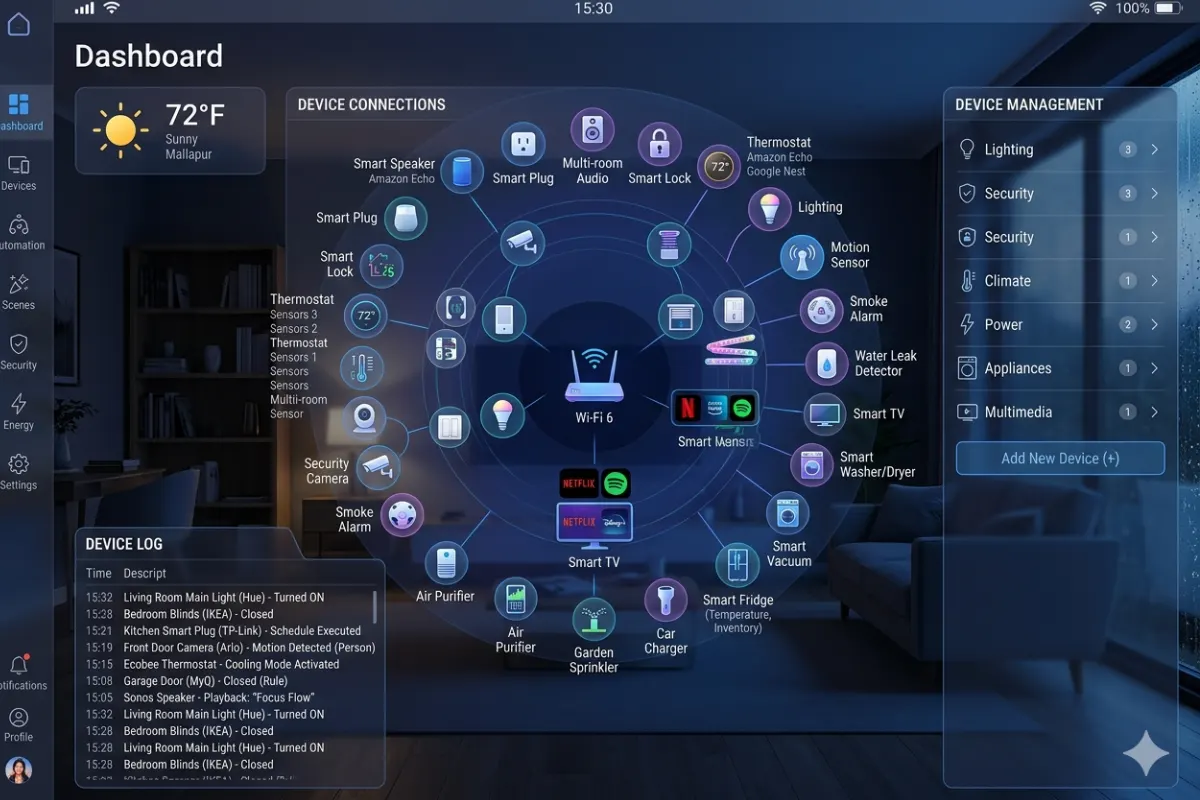
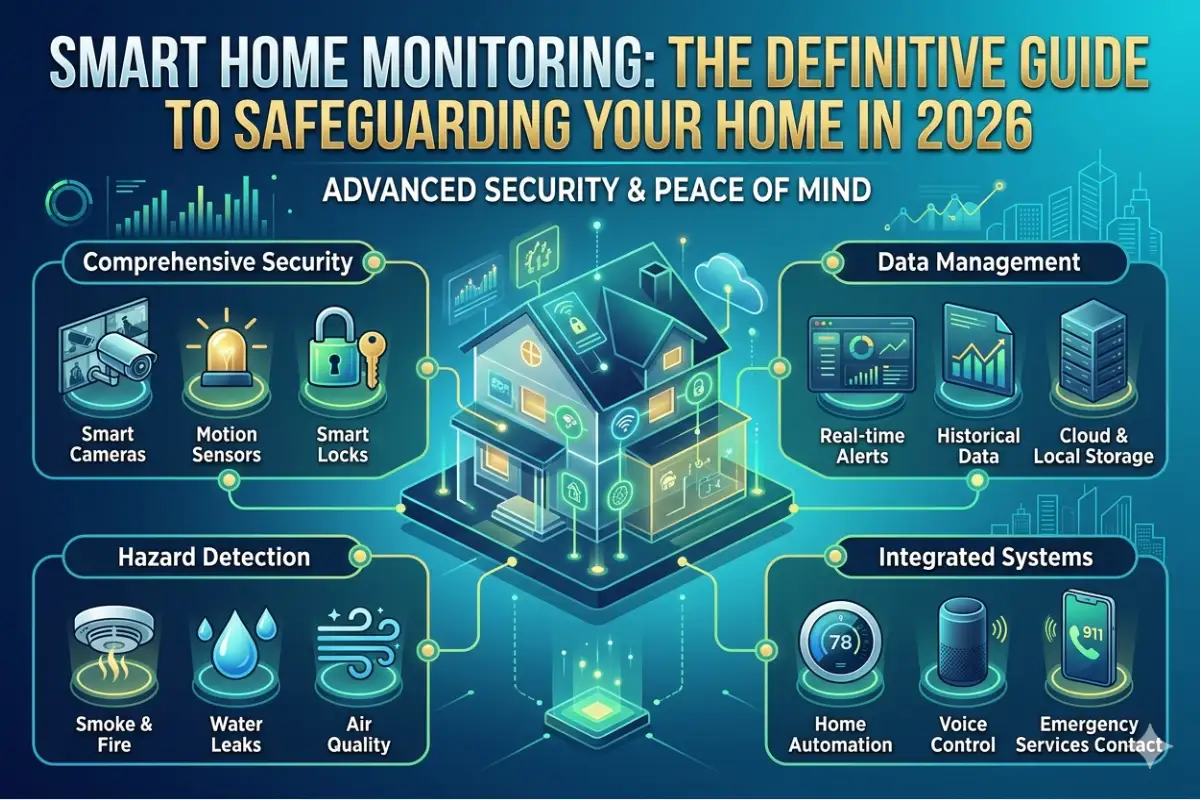
With the advancements in technology taking place in the smart homes industry, the use of smart home monitoring is perhaps the most useful of them all. Smart home monitors give you an accurate idea of the security, safety, consumption, and the environment of your house even when you’re miles away from home.
Whether it’s about securing your family members, checking on your pets, monitoring your deliveries, or simply making sure that your house is safe when you’re away on holiday, modern smart home monitors help in keeping you connected with your home in a better way.
This guide will help you understand the working of smart home monitoring, the types of home monitors, the required devices, and building a smart home monitoring system for 2026.
What Is Smart Home Monitoring?
Smart home monitoring means the use of internet-enabled gadgets to constantly monitor and record actions that take place within or around your home.
Contrary to conventional alarm systems that only act during emergencies, smart monitoring systems gather information from various devices like:
- Security cameras
- Motion sensors
- Door and window sensors
- Smart locks
- Smoke detectors
- Leak detectors
- Temperature sensors
- Smart doorbells
- Environmental monitors
They connect to a central hub or a cloud-based system and instantly notify you through your smartphone of whatever goes on.
Rather than guessing what is going on in your home, you simply open an app and get an overview of what is happening right now.
Why Smart Home Monitoring Is Necessary
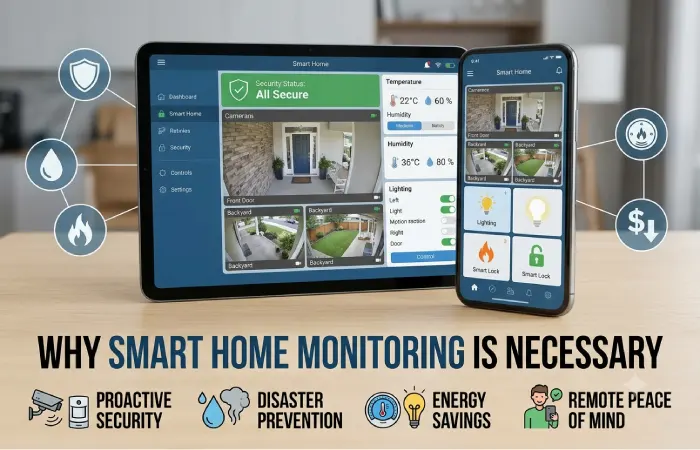
The demands of the current generation make people be away from home for very many hours.
Irrespective of whether you are at work, traveling, or doing shopping, there is need for constant monitoring.
Benefits include:
- Enhanced security
- Instant alerts during emergencies
- Remote access to cameras
- Protection against theft
- Fire and smoke detection
- Water leak prevention
- Energy monitoring
- Pet monitoring
- Elderly family member supervision
- Peace of mind
There will be no discovery of issues upon coming back home but rather notification as soon as anything out of the ordinary happens.
Smart Home Monitoring Process
The process of monitoring in the smart home consists of just four steps.
1. Devices Collect Information
Your house is constantly being monitored by sensors.
These may consist of:
- Motion detection
- Door openings
- Window status
- Indoor temperature
- Humidity
- Smoke
- Carbon monoxide
- Water leaks
2. Data Is Sent to a Hub or Cloud
Information travels via:
- Wi-Fi
- Zigbee
- Z-Wave
- Matter
- Bluetooth
The data is securely transmitted to your monitoring platform.
3. System Detects Events
The monitoring software analyzes activity.
Examples:
- Motion detected at midnight
- Front door unlocked unexpectedly
- Smoke alarm activated
- Garage door left open
- Water leak detected
4. Instant Notifications
Within seconds, your smartphone receives alerts such as:
- Motion detected
- Someone rang the doorbell
- Smoke alarm activated
- Water leak detected
- Front door unlocked
- Camera detected a person
Many systems also allow live video viewing immediately after receiving the notification.
Home Monitoring Systems
One of the biggest advantages of modern smart homes is the variety of home monitoring systems available.
Depending on your needs, you can monitor:
Security Monitoring
Protects against:
- Intruders
- Break-ins
- Trespassing
Common devices:
- Cameras
- Motion sensors
- Smart locks
- Window sensors
Safety Monitoring
Focuses on protecting people.
Includes:
- Smoke alarms
- Carbon monoxide detectors
- Gas leak sensors
- Emergency alerts
Environmental Monitoring
Keeps track of home conditions.
Examples:
- Temperature
- Humidity
- Air quality
- Water leaks
- Mold risk
Energy Monitoring
Tracks electricity usage.
Benefits include:
- Reduced electricity bills
- Appliance monitoring
- Peak usage analysis
- Smart energy automation
Appliance Monitoring
Monitor devices like:
- Refrigerators
- Washing machines
- HVAC systems
- Water heaters
Be notified when appliances malfunction or use excessive amounts of electricity.
Remote Home Monitoring
Among the many useful attributes of a smart house, remote home monitoring stands out as one of the most useful.
Rather than being physically present in your house, you have the freedom to access it from any part of the globe.
By using a mobile app, you will be able to:
- View live camera feeds
- Lock or unlock doors
- Turn lights on or off
- Check sensor status
- Monitor pets
- Watch deliveries
- Receive security alerts
- Review recorded footage
Whatever you do and wherever you are, your home stays within easy reach.
Smart Home Surveillance
Unlike conventional home security cameras, smart home surveillance takes more than simply recording videos.
Intelligent detection is possible with the advent of AI surveillance systems.
Modern cameras can identify:
- People
- Vehicles
- Animals
- Packages
- Motion
- Faces (supported models)
Rather than generating alerts for every action, AI enables minimizing false alerts by differentiating between an important alert and unimportant movements such as those of swaying trees or moving shadows.
Advanced surveillance features include:
- Night vision
- Two-way audio
- Cloud recording
- Local storage
- 4K video
- Motion zones
- Privacy masking
- Smart object detection
Home Monitoring Devices
Building an effective monitoring system starts with selecting the right home monitoring devices.
Smart Security Cameras
The most popular monitoring device.
Features include:
- Live streaming
- Motion alerts
- HD recording
- Night vision
- Cloud backup
Indoor and outdoor models are available.
Video Doorbells
Monitor visitors before opening the door.
Benefits:
- Live video
- Motion alerts
- Two-way communication
- Package detection
Smart Motion Sensors
Detect movement indoors and outdoors.
Great for:
- Hallways
- Garages
- Backyards
- Entrances
Door and Window Sensors
Receive notifications whenever:
- A door opens
- A window is opened
- An entry point remains unlocked
Smart Locks
Monitor who enters your home.
Useful features include:
- Remote locking
- Temporary guest codes
- Entry history
- Auto-lock
Smoke & Carbon Monoxide detectors
Generate an alert whenever any smoke or dangerous gases are detected.
Some systems even notify emergency contacts automatically.
Water leakage sensors
Underrated yet highly valuable.
Place them near:
- Washing machines
- Water heaters
- Bathrooms
- Kitchens
- Basements
Early detection can prevent expensive water damage.
Environmental Sensors
Monitor:
- Temperature
- Humidity
- Air quality
- Light levels
Useful for maintaining healthy indoor conditions.
Real-Time Home Monitoring
Perhaps the greatest advantage of today’s technology is real-time home monitoring.
Unlike older security systems that required reviewing footage later, smart systems provide instant information.
Real-time monitoring includes:
- Live camera feeds
- Instant mobile notifications
- Motion alerts
- Smart lock status
- Environmental alerts
- Smoke detection
- Water leak notifications
- Live doorbell video
Early notification means that you have time to act.
Smart Home Monitoring Automation
Automating monitoring increases its effectiveness.
Some examples are:
Motion Detection
If motion is detected outside:
- Floodlights turn on
- Cameras begin recording
- Smartphone notification sent
- Smart speaker announces activity
Smoke Detection
When smoke is detected:
- Smart lights flash
- Doors unlock
- HVAC shuts down
- Emergency contacts notified
Water Leak
If water is detected:
- Main water valve shuts off
- Notification sent
- Alarm activated
Vacation Mode
While you are away from home:
- Cameras monitor activity
- Lights simulate occupancy
- Doors remain locked
- Alerts become more sensitive
AI in Smart Home Monitoring
Artificial Intelligence has changed home security.
Rather than being reactive to every movement, AI is context-aware.
Examples of modern AI include:
- Facial recognition
- Package detection
- Pet detection
- Vehicle recognition
- Behavioral analysis
- Person tracking
- Activity zones
AI systems in the future will be able to predict abnormal actions before they turn into an emergency.
Privacy and Security Issues
Since these devices capture sensitive data, you need to make sure that your privacy and security are not compromised.
Some good practices include:
- Use strong passwords
- Use two-factor authentication
- Update firmware regularly
- Secure your Wi-Fi network
- Use encrypted cloud services
- Limit device permissions
- Disable cameras when privacy is needed
- Purchase devices from trusted manufacturers
A smart house begins with good cybersecurity practices.
Choosing the Best Smart Home Monitoring System
In choosing the right monitoring device, some key factors include:
Camera Quality
Choose cameras offering:
- Minimum 1080p resolution
- Night vision
- Wide viewing angles
- Weather resistance for outdoor use
Mobile App
The application must have the following features:
- Live viewing
- Instant notifications
- Easy device management
- Automation controls
Storage Options
Consider whether you prefer:
- Cloud storage
- Local storage using SD cards
- Network video recorders (NVR)
Compatibility
Ensure devices work with:
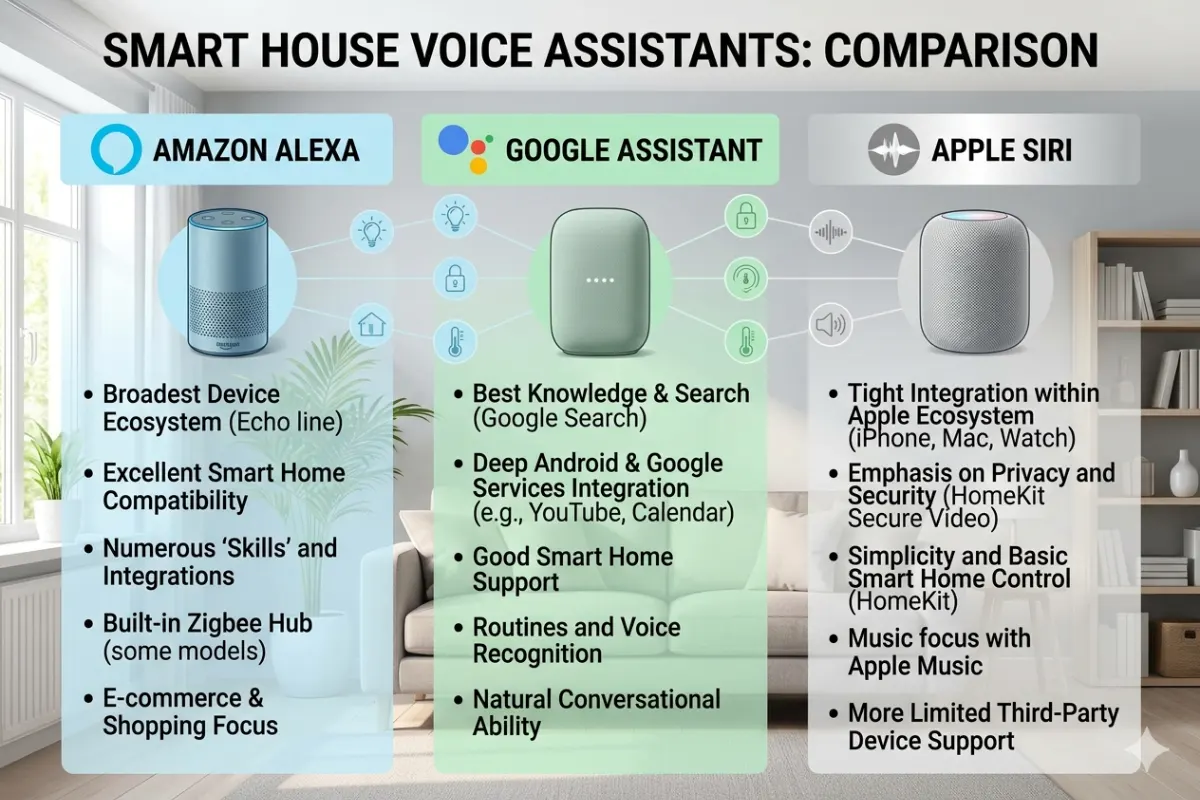
- Voice assistants
- Smart home platforms
- Matter-supported devices
- Existing smart home ecosystem
Subscription Costs
Some services require monthly subscriptions for:
- Video history
- AI detection
- Cloud backup
- Professional monitoring
Make comparisons first before purchasing.
Challenges in Smart Home Monitoring
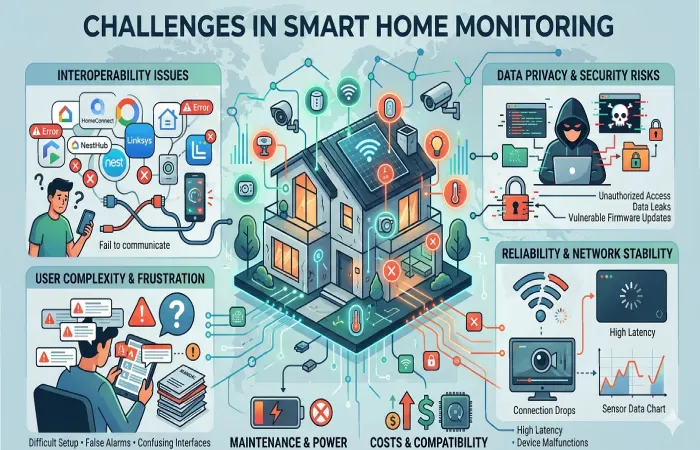
While there are many benefits of using smart home monitoring technology, the users must know about its potential weaknesses.
Some of the issues include:
- Wi-Fi dependency
- Internet outages
- Cloud subscription costs
- False motion alerts
- Battery replacement
- Privacy concerns
- Device compatibility issues
Planning ahead can avoid most of these issues.
Future of Smart Home Monitoring
Smart monitoring technology is rapidly advancing.
Future innovations may include:
- Predictive AI security
- Advanced facial recognition
- Drone-assisted home surveillance
- Edge AI processing
- Improved Matter compatibility
- Faster emergency response integration
- Smarter energy monitoring
- Enhanced privacy controls
With the advancement of artificial intelligence, your home is going to get smarter and more secure than ever.
Best Practices for Effective Home Monitoring
For better performance of your monitoring device, do the following things:
- Position cameras strategically.
- Conduct regular checks of sensors and alarms.
- Make sure your firmware and applications are up to date.
- Back up important recordings.
- Set up unique and strong passwords.
- Use two-factor authentication.
- Adjust notifications to avoid unnecessary alerts.
- Review and update your automations from time to time.
- Have good Wi-Fi connectivity around your house.
- Take care of battery management and maintenance of connected
FAQ
Is home monitoring worth it?
Yes, because it makes your house more secure and safer, providing convenience and peace of mind.
Is it possible to monitor my house without monthly fees?
Yes, many devices have built-in storage that will let you watch both live stream and record footage without subscribing, while using AI technology might require additional fees.
What internet speed is recommended?
For several HD cameras and live streaming, it is advised to use a reliable broadband connection with an upload speed of 10-20 Mbps or more.
Is it difficult to set up a smart home surveillance system?
Most of the latest systems are easy to set up and feature a guide via a mobile application. In some cases, professionally installed systems might be useful.
Will smart home surveillance be functioning during the power outage?
There are smart home devices with battery back-up, while others can still work during a power outage. However, some functions of your system can be available only with a working internet connection.
Conclusion
It has progressed from simple alarm systems to systems that provide total coverage on the state of the home in terms of security and safety. The use of smart sensors, artificial intelligence technology, remote control, and alarms have made the system proactive when it comes to providing security to the homeowner’s property.
The combination of home monitoring system, remote home monitoring, home surveillance, home monitoring devices, and real-time home monitoring can create a connected home that is both safe and easy to operate. In the continuous advancement of technology, the investment on a good smart home monitoring system is the best thing to do.