

Last Updated: June 22, 2026
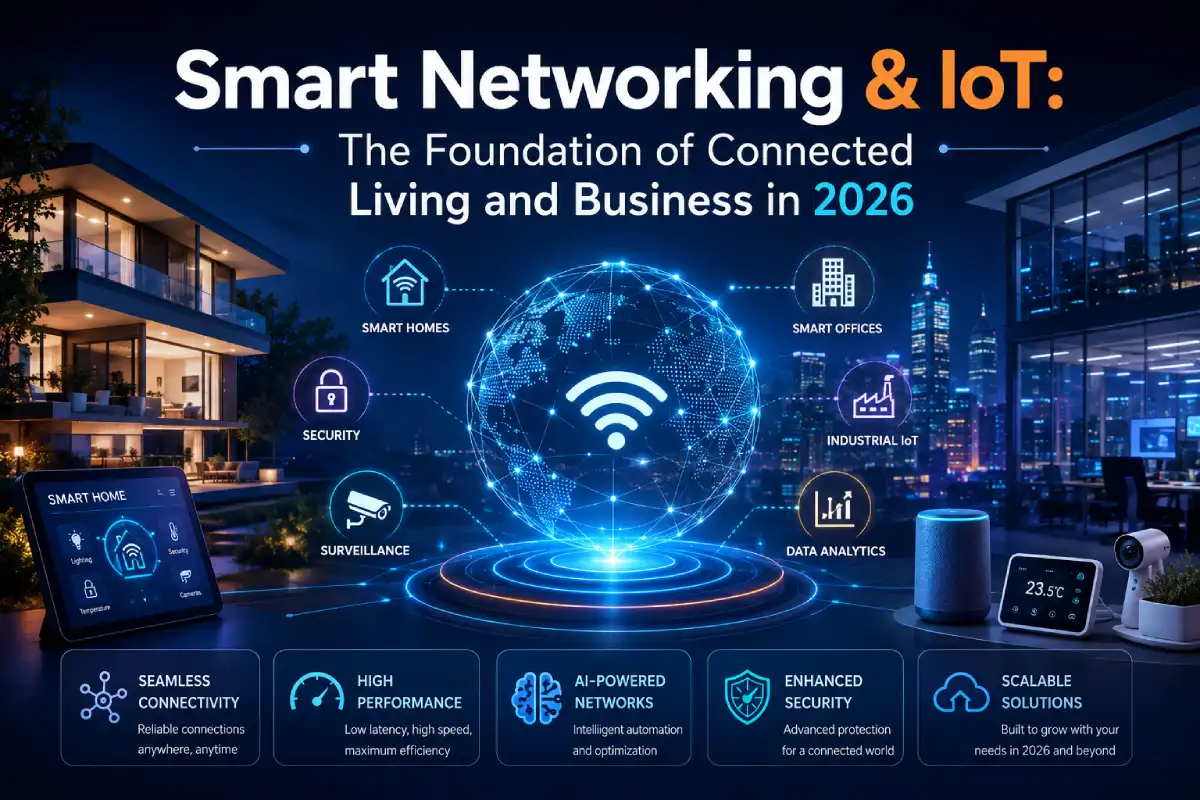
In todays business world networking is not about connecting computers and things like printers. Companies need networks that’re smart can grow with them and are safe. These networks have to support things like cloud applications people working from home devices that can connect to the internet tools that use intelligence and platforms that let people work together in real time.
As companies keep moving to a mix of working from the office and home and using cloud-based systems in 2026 networking has become very important for business. It is no longer something the IT department handles.
If you own a business and are setting up your first office network or if you are in charge of IT for a big company and are upgrading your network you need to know about modern networking. This is crucial, for keeping your business running smoothly safely and successfully.
This guide will look at the ways companies can set up their networks, including smart office networks, cloud networking solutions and hybrid work networking technologies that are changing the way businesses work.
Enterprise networking from our networking techniques pillar.
What Is Enterprise Networking?
Enterprise networking is about creating and managing systems that help devices, users, applications and business resources talk to each other within an organization. This includes planning setting up and taking care of these systems. Enterprise networking is really important, for organizations because it helps them work smoothly. Enterprise networking systems connect all the devices and users. This helps the organization to work together and share information easily.
Unlike home networks, enterprise networks must support:
- Thousands of devices
- Multiple office locations
- Cloud applications
- Remote employees
- High security requirements
- Continuous uptime
Enterprise networking enables:
- Internal communication
- Internet connectivity
- Cloud access
- Data sharing
- Video conferencing
- Cybersecurity enforcement
- Business continuity
Enterprise Networking Market Growth in 2026
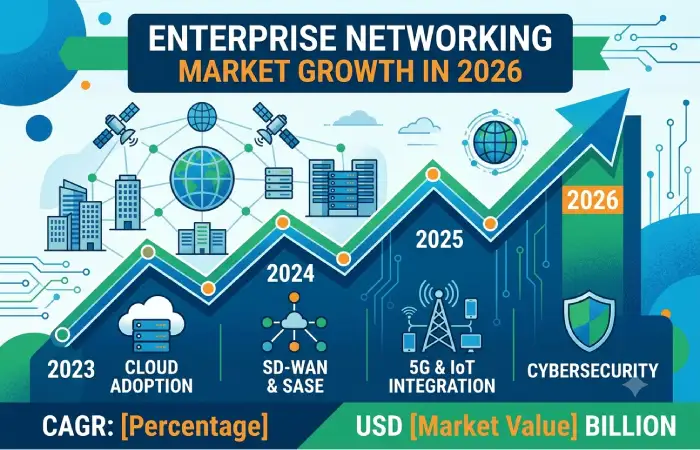
The industry of networking is continuously witnessing an exponential growth as a result of cloud implementation and hybrid work environment.
Enterprise Networking Industry Trends (2026)
| Metric | 2023 | 2026 |
| Global Enterprise Networking Market | $98 Billion | $145 Billion |
| Cloud Networking Adoption | 58% | 85% |
| Hybrid Work Organizations | 42% | 78% |
| AI-Driven Network Management | 12% | 63% |
| SD-WAN Deployment | 35% | 74% |
Growth Visualization
Enterprise Networking Implementation (2026)
Cloud Networking ████████████████████ 85%
Hybrid Work Environment Support ██████████████████ 78%
SD-WAN Implementation ███████████████ 74%
AI Network Solutions ████████████ 63%
The above-mentioned statistics demonstrate the growing trend towards intelligent cloud networking infrastructure.
Protect data with our network security techniques guide.
Core Components of Enterprise Networks
A modern office network consists of multiple interconnected layers.
1. Routers
Routers route data packets through networks and internet connection.
Functions include:
- Traffic routing
- VPN support
- Security policies
- Internet connectivity
2. Switches
Switches provide connection among devices on local network.
Advantages:
- Faster communication
- Network segmentation
- Increased efficiency of bandwidth usage
3. Wireless Access Points
Contemporary business relies heavily on wireless internet access.
Enterprise-grade access points offer:
- High-density support
- Centralized management
- Roaming capabilities
- Security controls
4. Firewalls
Firewall monitors traffic entering and leaving network.
Features:
- Threat detection
- Intrusion prevention
- Application filtering
- User access control
5. Network Management Systems
Management platforms provide visibility into network health.
Characteristics:
- Monitoring
- Automation
- Reporting
- Troubleshooting
Enterprise Networking Technologies for 2026
Businesses are increasingly implementing innovative network architectures in order to enhance their efficiency and flexibility.
Software-Defined Networking (SDN)
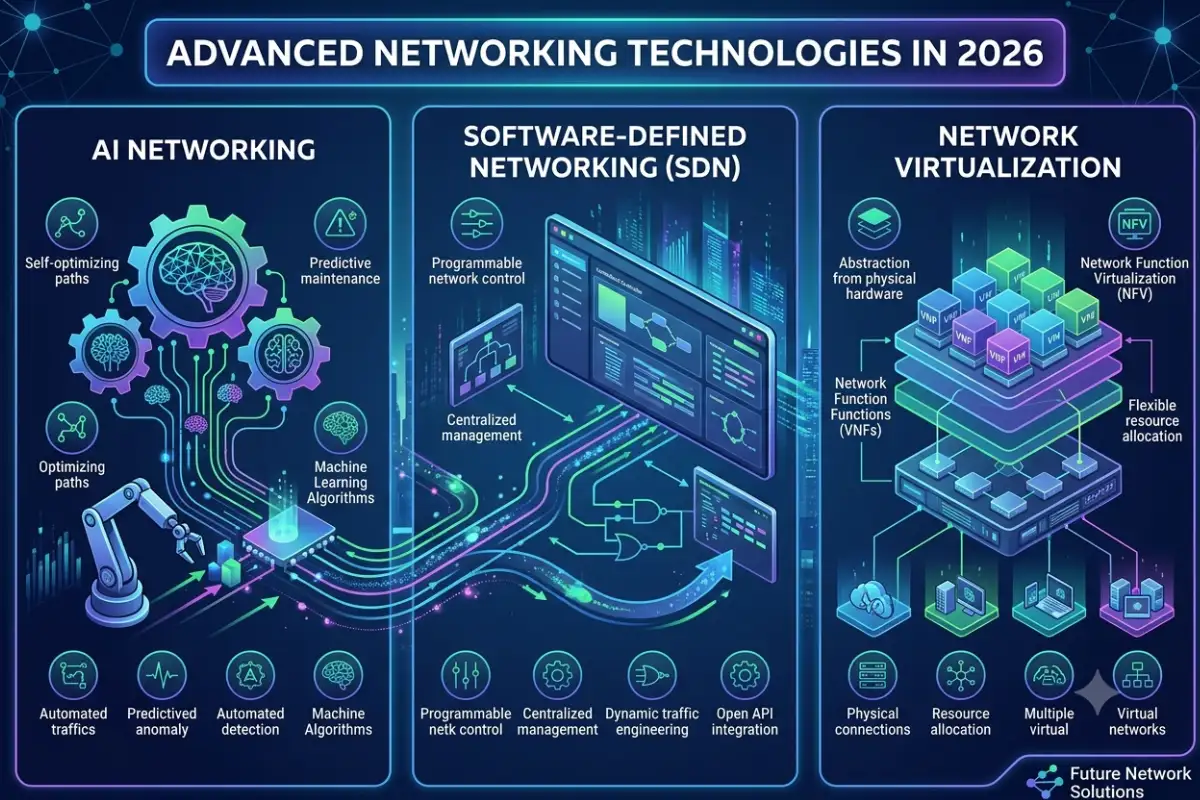
SDN decouples network control from physical devices.
Benefits
- Centralized management
- Faster deployments
- Reduced complexity
- Improved automation
Traditional Networking vs SDN
| Feature | Traditional Network | SDN |
| Configuration | Manual | Automated |
| Scalability | Moderate | High |
| Visibility | Limited | Extensive |
| Deployment Speed | Slow | Fast |
| Cost Efficiency | Lower | Higher |
Network Segmentation
Network segmentation divides infrastructure into isolated sections.
Benefits:
- Better security
- Reduced attack surfaces
- Easier management
- Improved performance
Example:
- Finance Department
- HR Department
- Guest Wi-Fi
- IoT Devices
Each receives separate access permissions.
Zero Trust Networking
Zero Trust follows the principle:
“Never trust, always verify.”
Every user and device must continuously authenticate.
Key Elements
- Multi-Factor Authentication
- Device validation
- Identity management
- Continuous Monitoring
Network Automation
Automation reduces manual IT tasks.
Examples include:
- Automated provisioning
- Configuration management
- Security policy updates
- Incident response
Smart Office Network Setup Guide
Creating a Smart Office Network Entails Planning for Present and Future Needs.
Step 1: Requirement Assessment
Determine:
- Employee count
- Devices per employee
- Cloud applications
- Video conferencing usage
- IoT devices
Step 2: Deploy Enterprise Wi-Fi
Modern smart offices require:
- Wi-Fi 6E
- Wi-Fi 7 Readiness
- Multiple access points
- Guest network separation
Step 3: Implement Security
Security layers should include:
- Firewalls
- Endpoint protection
- MFA
- VPN access
- Zero Trust policies
Step 4: Enable Monitoring
Monitoring helps identify:
- Bandwidth issues
- Device failures
- Security incidents
- Performance bottlenecks
Best Networking Solutions for Small Businesses
Small businesses need affordable yet scalable solutions.
Top Network Types
| Solution | Best For | Cost | Scalability |
| Traditional LAN | Small Offices | Low | Medium |
| Cloud Managed Network | Growing Businesses | Medium | High |
| SD-WAN | Multi-Location Companies | Medium | Very High |
| Hybrid Cloud Network | Remote Teams | Medium | High |
Small Business Network Recommendations
1. Cloud-Managed Wi-Fi
Benefits:
- Easy deployment
- Remote management
- Automatic updates
2. Managed Switches
Advantages:
- VLAN support
- Better performance
- Security controls
3. Business Firewalls
Provide:
- Threat prevention
- VPN connectivity
- Application filtering
Cloud Networking for Businesses
Cloud networking is becoming the preferred model for modern organizations.
Instead of relying solely on physical infrastructure, cloud networking distributes services through cloud environments.
Why Businesses Are Moving to Cloud Networking
Advantages
Scalability
Businesses can quickly add:
- Users
- Applications
- Locations
Without purchasing significant hardware.
Cost Reduction
Cloud networking lowers:
- Hardware expenses
- Maintenance costs
- Deployment costs
Remote Accessibility
Employees can securely access resources from anywhere.
This is essential for hybrid work environments.
Cloud Networking vs Traditional Networking
| Feature | Traditional | Cloud Networking |
| Hardware Dependency | High | Low |
| Scalability | Limited | Excellent |
| Remote Access | Moderate | Excellent |
| Maintenance | Manual | Automated |
| Deployment Speed | Slow | Fast |
Hybrid Work Networking Solutions
Hybrid work continues dominating business operations in 2026.
Networks must support employees working:
- At headquarters
- From home
- While traveling
Challenges of Hybrid Work Networks
Increased Security Risks
Remote users create additional attack surfaces.
Common threats include:
- Phishing
- Credential theft
- Malware
- Unsecured Wi-Fi networks
Bandwidth Demands
Video meetings require substantial bandwidth.
Applications include:
- Microsoft Teams
- Zoom
- Google Meet
Cloud Application Dependency
Organizations rely heavily on:
- SaaS platforms
- Cloud storage
- Remote collaboration tools
Hybrid Networking Architecture
Modern businesses adopt:
SD-WAN
Benefits:
- Optimized cloud performance
- Traffic prioritization
- Reduced WAN costs
Secure Access Service Edge (SASE)
Combines:
- Networking
- Security
- Cloud access
Into a single platform.
Hybrid Work Technology Adoption (2026)
| Technology | Adoption Rate |
| VPN | 91% |
| Cloud Collaboration Tools | 96% |
| SD-WAN | 74% |
| SASE | 61% |
| Zero Trust Security | 67% |
AI-Powered Networking in 2026

Artificial Intelligence is changing enterprise networking.
AI systems can:
- Predict failures
- Detect anomalies
- Bandwidth Optimization
- Improve security
Advantages of AI Networking
Predictive Maintenance
AI spots problems even before outages happen.
Automated Troubleshooting
Network problems can be resolved automatically.
Smart Traffic Management
AI prioritizes critical business applications.
Speed it up via our network performance optimization guide.
AI vs Traditional Network Management
| Feature | Traditional | AI-Powered |
| Monitoring | Reactive | Predictive |
| Troubleshooting | Manual | Automated |
| Security Detection | Limited | Advanced |
| Performance Optimization | Basic | Intelligent |
| Downtime Reduction | Moderate | High |
Enterprise Network Security Best Practices
Security still comes first.
Required Security Measures
Multi-Factor Authentication
Ensures account security beyond passwords.
Network Segmentation
Limits lateral movement of attackers.
Endpoint Security
Ensures safety of laptops, desktops and mobile devices.
Continuous Monitoring
Spots threats in real time.
Employee Training
Makes phishing attacks less successful.
Common Networking Errors that Businesses Make
Using Consumer Hardware
Consumer devices often lack:
- Security features
- Scalability
- Reliability
Ignoring Network Monitoring
Without visibility, problems remain hidden.
Poor Wi-Fi Planning
Dead zones reduce productivity.
Lack of Redundancy
Single points of failure can halt operations.
Weak Security Policies
Inadequate authentication makes companies vulnerable.
Future of Enterprise Networking Past 2026
Several technologies are expected to keep influencing networking.
Emerging Trends
AI-Fueled Autonomous Networks
Self-managing network infrastructure.
Wi-Fi 7 Rollout
More powerful wireless connectivity and lower latency.
Edge Computing
Processing data closer to users.
Quantum-Resistant Security
Preparing for future cybersecurity threats.
Integrated SASE Platforms
Networking and security convergence.
Enterprise Networking Investments for 2026
Businesses that intend to upgrade their networks should focus on:
| Priority | Impact |
| Network Security | Very High |
| Cloud Networking | Very High |
| Wi-Fi 6E/7 | High |
| AI Network Management | High |
| SD-WAN Deployment | High |
| Automation | Medium |
| Edge Networking | Medium |
Conclusion
Enterprise networking is not about connecting computers in an office anymore. These days in 2026 companies that do well use cloud networking and other new technologies like intelligence to manage their networks. They also use SD-WAN and Zero Trust security to keep their networks safe.. They have hybrid work infrastructure to support people working from different places.
Companies that put money into networking solutions can work better and safer. Their employees are also happier. They can get things done faster. If you are starting an office network or updating an old one using cloud networking and automation will help your company do well in the long run. This is because businesses are becoming more connected every day. So using cloud- automation-driven networking strategies will make your Enterprise networking stronger and more resilient. Enterprise networking is really important, for any company that wants to grow and be successful.