

Last Updated: September 28, 2026
AI personal assistant is also emerging as helpful digital component of the day-to-day operations. They are able to answer questions, help in managing certain data, set up reminders, prepare message drafts, summarize documents, assist in research processes and other similar tasks.
Unlike the traditional digital assistant, where the user can only ask basic set of pre-programmed voice commands, the modern AI personal assistant is able to comprehend the natural language, handle more intelligent conversations and often integrate with other systems like calendars, emails, documents, smart gadgets and even business systems.
This section details the definition of the tool, how to go about the tool, and the main purpose of the tool and the critical of using the AI personal assistant.
AI Personal Assistants: Meaning and Key Concepts
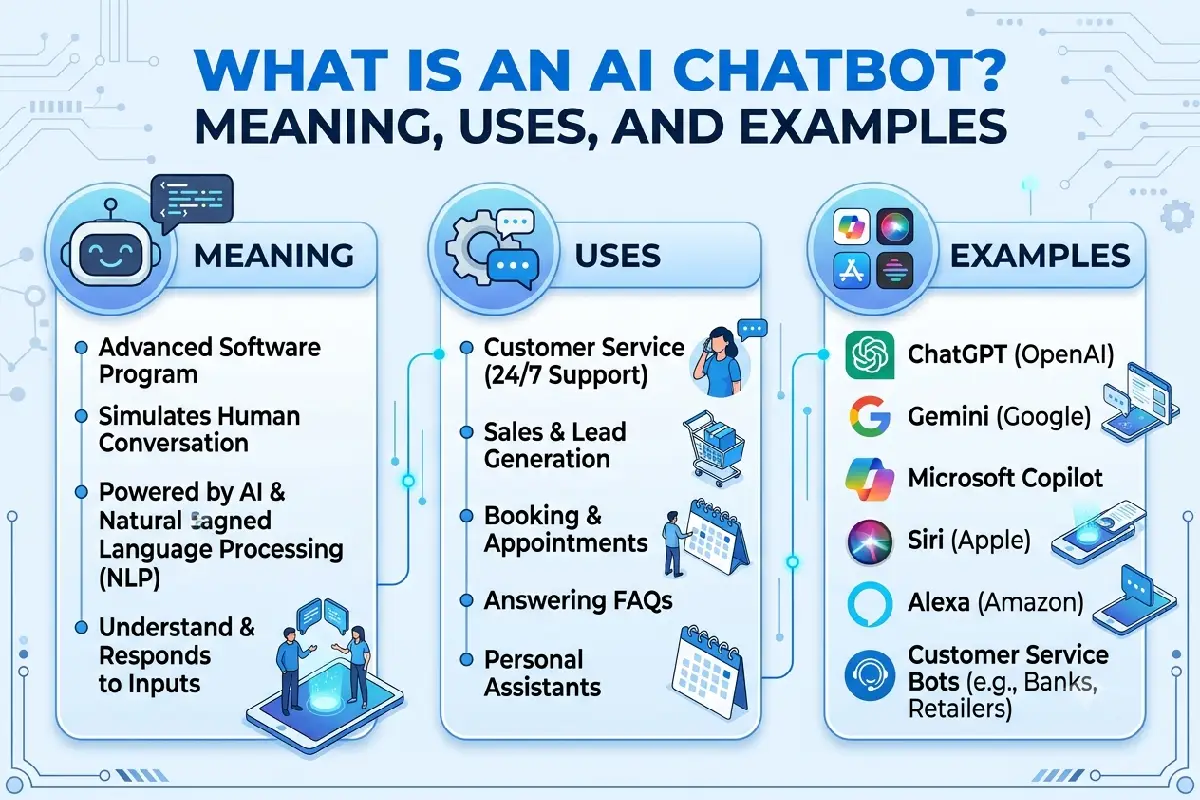
An AI personal assistant is a piece of software, which employs AI, and assists users to carry out tasks.
You could simply request to be provided by an assistant with a brief précis of a lengthy document, a timetable for the week, clarification of something that you have found very problematic, composition of an email, a list of ideas or even the arrangement of information.
Most modern day helpers utilize NLP, machine learning, speech recognition, and LLMs.
The Functioning of AI Personal Assistants
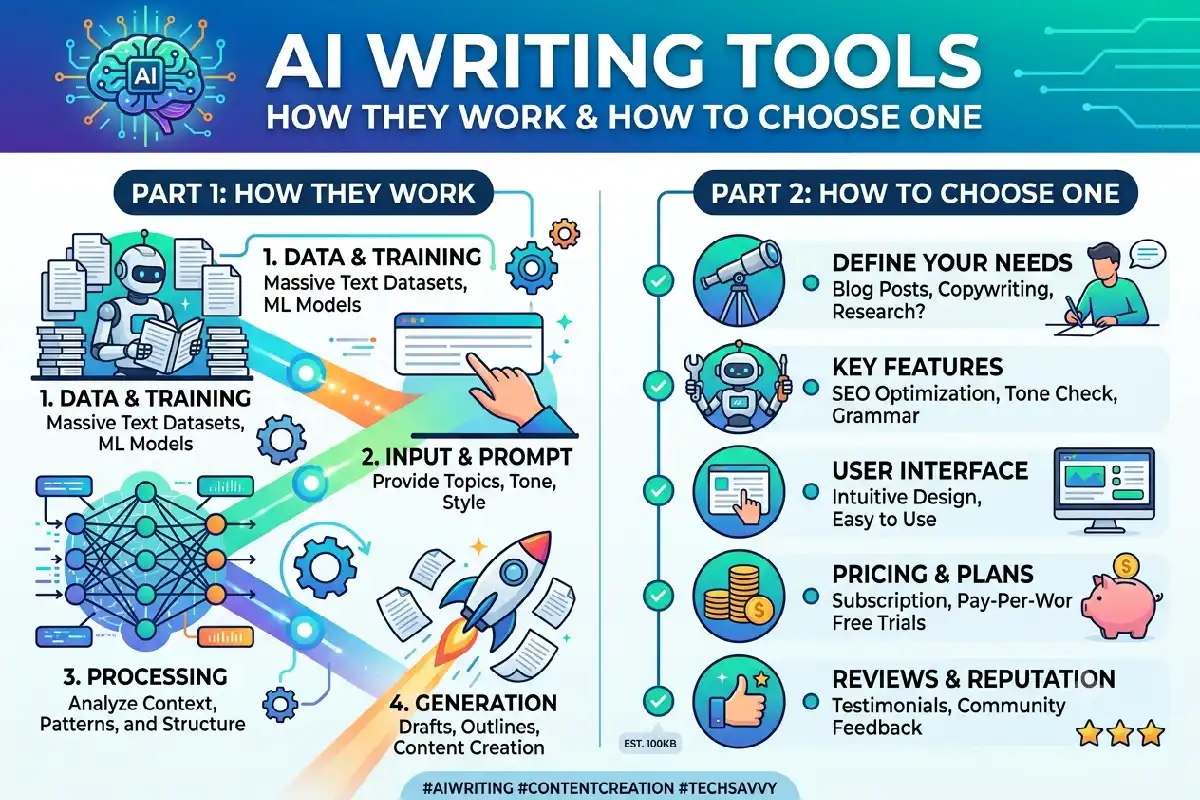
The basic process can be understood in four steps:
- User input
The user enters a query via text, speech, or other user interface he‘s enabled to use.
For example:
“Draw up a small timetable for my tasks tomorrow.”
- Understanding the request
It would then look at the words and context to make a decision about what the user is asking for.
- Generating or retrieving information
The assistant may reply with an AI built answer, call information from the connected services, or leave the action available.
- Providing the result
The assistant will reply with information like a schedule, summary, recommendation, reminder, or draft.
More advanced AI assistants retain conversational context, so making a change to their request does not require users to repeat everything they have already said.
Why AI Personal Assistants Matter
Individuals can actually dedicate a significant amount of time on small digital tasks: opening and searching for files, creating agenda items, chatting and drafting messages, summarising documents, and setting reminders.
AI personal assistants may also eliminate some of this repetition.
Save Time
One of their greatest benefits is speed.
Instead of manually scanning through a bunch of pages of content a user can simply query an AI agent to give a summary of the important information in there. A rough sketch can be turned into a ready-to-use document in seconds.
Improve Productivity
AI assistants can support everyday productivity tasks such as:
- Creating task lists and schedules
- Drafting emails and documents
- Summarizing information
- Brainstorming ideas
- Organizing notes
- Preparing meeting agendas
- Explaining difficult concepts
- Researching topics
Because of their verbosity, they may be cumbersome for processing dull or information-rich work.
Make Technology Easier to Use
Natural-language interfaces can facilitate software interaction as well.
Users might be able to explain what they want without having to go through a dozen menu options.
For example:
“Summarize my meeting notes and turn the important points into a task list.”
The AI is able to understand the command and generate a structured result.
Key Types, Methods, and Examples
Different types of AI personal assistants There are different types of personal assistants. So knowing the differences may enable you to pick the right tools for you.
Conversational AI Assistants
The majority of these assistants are in the form of text or voice conversations.
They have the capacity to answer questions, tutor a topic, generate ideas, compose text, condense material, and conduct research.
Such examples of… includes ChatGPT, Google Gemini, Microsoft Copilot and various other general AI assistants that generate AI.
Voice Assistants
Voice-based assistants are made with voice commands as the foundation for interacting with them.
Most popular usage of these devices include checking the weather, playing music, creating reminders, controlling compatible smart-home devices, and answering simple questions.
Productivity Assistants
With an eye toward productivity, AI assistants can support the user in their workplace activities.
They may find it useful to themselves as well as sharing certain things with you, like: documents, meetings, calendars, emails, presentations, spreadsheets or project information, depending on their integrations & permissions.
These tools can be especially helpful for those whose work involves large quantities of information.
Specialized AI Assistants
Some assistants are designed for a specific purpose rather than general conversation.
Examples include assistants for:
| Assistant Type | Common Uses |
| Writing | Drafting, rewriting and proofreading |
| Research | Finding and summarizing information |
| Meetings | Notes, summaries and action items |
| Scheduling | Calendar organization and reminders |
| Coding | Code suggestions and explanations |
| Customer support | Answering common customer questions |
Enhanced ability An assistant tailored for a specific work process provides its specialized functions.
How to Use or Apply AI Personal Assistants
The effectiveness of an AI assistant, to some extent, will depend on how you interact with it.
Start With a Clear Request
Instead of writing:
“Help with my schedule.”
Provide more context:
“Create a weekday schedule for my five tasks. Put the most important tasks in the morning and include a 30-minute lunch break.”
Clear instructions reduce ambiguity.
Break Large Tasks Into Steps
Complex demands are simpler if built from multiple steps.
For instance, instead of asking the AI to produce a complete business presentation right away, you can instruct:
- Identify the main topics.
- Create an outline.
- Draft the key points.
- Review the structure.
- Refine the final content.
That gives you additional control over the outcome.
Use AI for Repetitive Tasks
Identify jobs you have done often.
The AI aide might lessen your labor when you frequently plan notes, strike up similar emails to summaries, most likely plan your own next word, or search your mind for positioning show.
Review Important Information
Incorrect, incomplete, or out-of-date information may also be included in answers provided by AI.
Important facts should therefore always be verified with another trusted source, particularly when it refers to health, finance, law, safety or a significant business decision.
How to Choose an AI Personal Assistant
One assistant is not ideal for everyone. The optimal solution depends on the tasks you want the assistance for.
Think about the following:
Features: Do you mostly want writing, research, scheduling, voice controls, file analysis, coding help, or automation?
Integrations: Find out if the assistant is compatible with your current applications.
Privacy: Review what info is collected by the service how the info is stored what control exists
Easy to Use: An effective assistant is frustrating if its interface complicates routine information gathering.
Price: Some assistants are free, with more advanced plans, integrations or higher limits having a cost.
Accuracy: Evaluate the assistant by testing it with tasks that you routinely complete and not just based on marketing it.
Best Practices and Common Mistakes
AI helpers are more effective as aids to human effort than as technocrats.
As a rule of thumb, supply the assistant with enough context to understand your goal. Mention who you are writing for, what output you are expecting, length or tone, and restrictions when relevant.
Another good habit is, before multiplying, to check the output. AI can be very convincing but full of errors.
” Do not submit any private or sensitive information until you understand how the service will treat the data and until you have the approval of your organisation to provide that information.
It‘s easy to assume the assistant will ignore vague requests. If the initial result is not what you hoped, improve the prompt by indicating what to clarify:
Do not use AI to make all decisions. AI can order, collect, and even show available choices, but it cannot replace the need for human thinking and professional help.
Final Thoughts
AI personal assistants are transforming from being basic command-driven solutions into being used to help users communicate, learn, retrieve information and perform a range of basic normal digital activities.
The value is derived from having an effective helper. Research it to understand its features, integrations, privacy, pricing, and reliability before bringing it into the fold of your daily work.
Specifically treated AI as partner rather than a God. Well-made, simple explanations, thoughtful scrutiny and viable privacy measures make these systems more useful, and steer away from what can be the pitfalls.
FAQs
What are an AI personal assistants?
An AI personal assistant is a type of software which employs artificial intelligence to understand commands and assist with tasks for example answering questions, composing, scheduling, research, reminders and storing information.
What is possible for an AI personal assistant?
They can generate content with some of the tools, they can summarise, write new documents, they can answer questions, they can organize the schedules and set reminders, they can analyze and generate ideas, they can work with extensions.
Are AI personal assistants correct?
They can be helpful, however they are not always reliable and should not be used without checking the information given via other more trusted resources.
Can AI personal assistants enhance efficiency?
They can also cut down unnecessary time on the redundant task of devising text, refreshment, organizing data and preparing repetitive-based material.
Selecting an AI personal assistant?
Think about the tasks you require assistance on, the integrations provided, privacy controls, user-friendliness, pricing, and the reliability at performing the tasks you usually do.