
Last Updated: June 22, 2026
The Internet of Things is changing how our homes, offices and cities work. We have things like thermostats and security cameras that talk to each other all the time. There are also sensors in industries and smart systems, in offices that use Artificial Intelligence.
All these devices are connected to the internet. Talk to each other.. Just connecting them is not enough anymore. We need Internet of Things systems that’re smart, safe and work really fast.
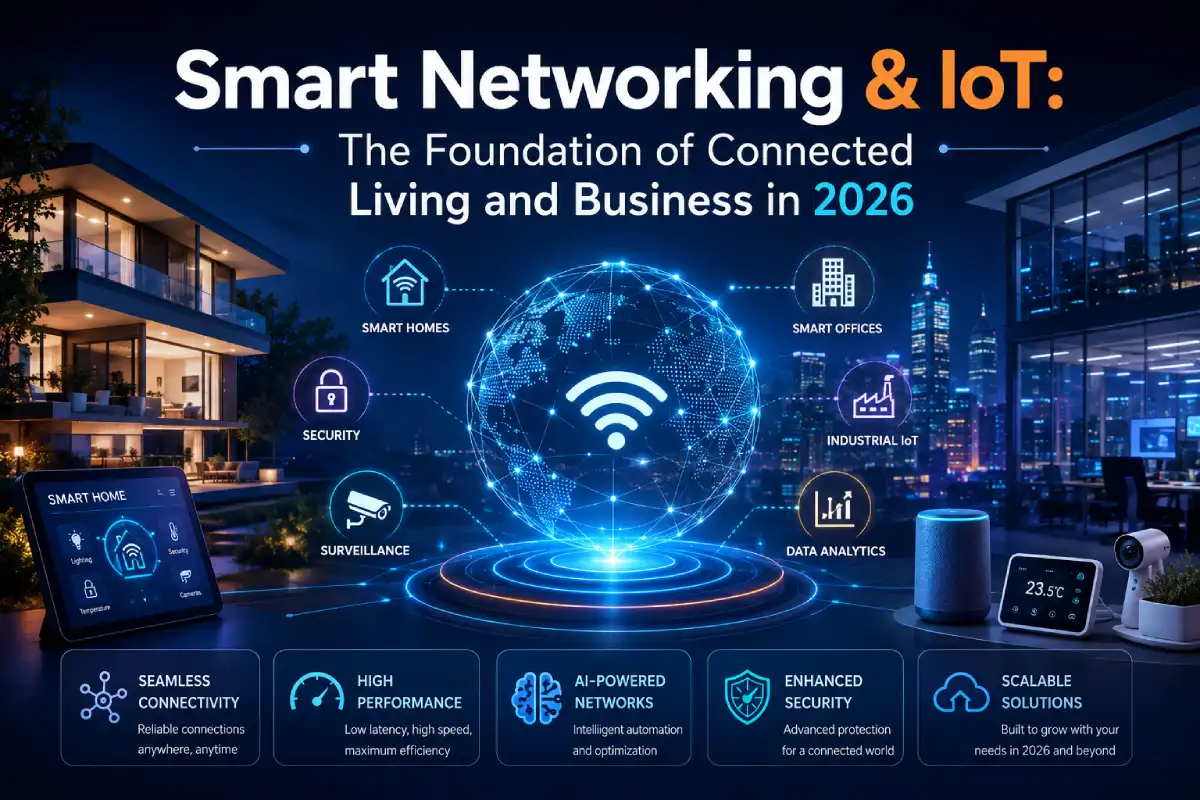
This is where Smart Networking and Internet of Things come together. Smart Networking uses computers to automate things Artificial Intelligence to make decisions and special wireless technologies to help devices talk to each other.
More and more Internet of Things devices are used in 2026 people are using smarter ways to make their networks work better. They want their Internet of Things devices to be reliable, safe and work well.
This guide will explain what Smart Networking is, how Internet of Things devices work together and new ideas that will shape the future of devices. It will also talk about homes, offices and new networking strategies.
IoT networking from our networking techniques guide.
What Is Smart Networking?
Smart networking refers to the use of intelligent technologies that automatically monitor, manage, optimize, and secure network traffic.
Unlike traditional networking, smart networking can:
- Automatically detect network issues
- Prioritize critical device traffic
- Optimize bandwidth usage
- Improve IoT device communication
- Reduce latency
- Enhance cybersecurity
- Support AI-driven automation
Design networks that can adjust on the fly. These networks don’t require IT teams to manage them every hour of every day.
What Is IoT?
The Internet of Things or IoT is a network of devices connected to the internet. These devices collect data share it and then process it. The Internet of Things devices are physical. They are linked to the internet. This helps them gather, exchange and handle data.
Examples include:
| Consumer IoT | Business IoT | Industrial IoT |
| Smart lights | Smart cameras | Factory sensors |
| Smart locks | Access control systems | Predictive maintenance devices |
| Smart thermostats | Meeting room automation | Robotics systems |
| Voice assistants | Asset tracking devices | Energy monitoring systems |
“There will be more than 35 billion IoT devices in operation worldwide by 2026, and those IoT devices will create an enormous amount of network traffic.
Why Smart Networking Matters for IoT

Traditional networks were designed primarily for computers and servers.
IoT introduces new challenges:
- Thousands of connected devices
- Constant data generation
- Real-time communication requirements
- Increased security risks
- Diverse connectivity standards
Smart networking handles this by way of AI, Automation, Edge Computing, intelligent traffic handling.
Benefits include:
- Faster response times
- Better network visibility
- Improved device management
- Enhanced security
- Lower operational costs
- Greater scalability
- IoT Network Architecture Explained
Understanding IoT architecture is essential for building reliable smart networks.
Four-Layer IoT Architecture
| Layer | Function | Examples | |
| Device Layer | Collects data | Sensors, cameras, smart locks | |
| Network Layer | Transfers data | Wi-Fi, Zigbee, 5G, Ethernet | |
| Processing Layer | Analyzes data | Edge devices, cloud platforms | |
| Application Layer | Delivers services | Mobile apps, dashboards |
How Data Flows
- Sensors collect information.
- Devices transmit data through the network.
- Edge or cloud systems process information.
- Applications present actionable insights.
- Commands are sent back to devices.
This architecture enables intelligent automation across smart homes, offices, and industrial environments.
See our wireless networking techniques guide for IoT links.
Smart Networking Techniques for IoT Devices
Several networking methods dominate IoT deployments in 2026.
1. Mesh Networking
Mesh networking allows devices to communicate directly with neighboring devices.
Advantages
- Self-healing network paths
- Extended coverage
- Reduced dead zones
- High reliability
Common Use Cases
- Smart homes
- Building automation
- Industrial IoT
Comparison
| Feature | Traditional Wi-Fi | Mesh Network |
| Coverage | Limited | Extensive |
| Reliability | Moderate | High |
| Scalability | Moderate | Excellent |
| Maintenance | Manual | Automated |
2. Software-Defined Networking (SDN)
SDN separates network management from hardware.
Benefits include:
- Centralized control
- Automated configuration
- Better visibility
- Dynamic traffic routing
These include extensive deployment and management of SDN for largescale IoT IoT networks.
3. AI-Driven Network Optimization
Intelligent Networking Solutions & Smart Devices The network is intelligence. Artificial intelligence (AI) is now a major player in networking.
AI systems can:
- Predict congestion
- Detect anomalies
- Identify cyber threats
- Optimize bandwidth allocation
- Improve device performance
AI-powered networking reduces downtime and improves user experience.
4. Edge Networking
Edge networking processes data closer to where it is generated.
Instead of sending everything to the cloud, edge devices perform local analysis.
Benefits:
- Reduced latency
- Lower bandwidth consumption
- Faster decision-making
- Better privacy
Edge networking is becoming essential for mission-critical IoT applications.
5. Network Segmentation
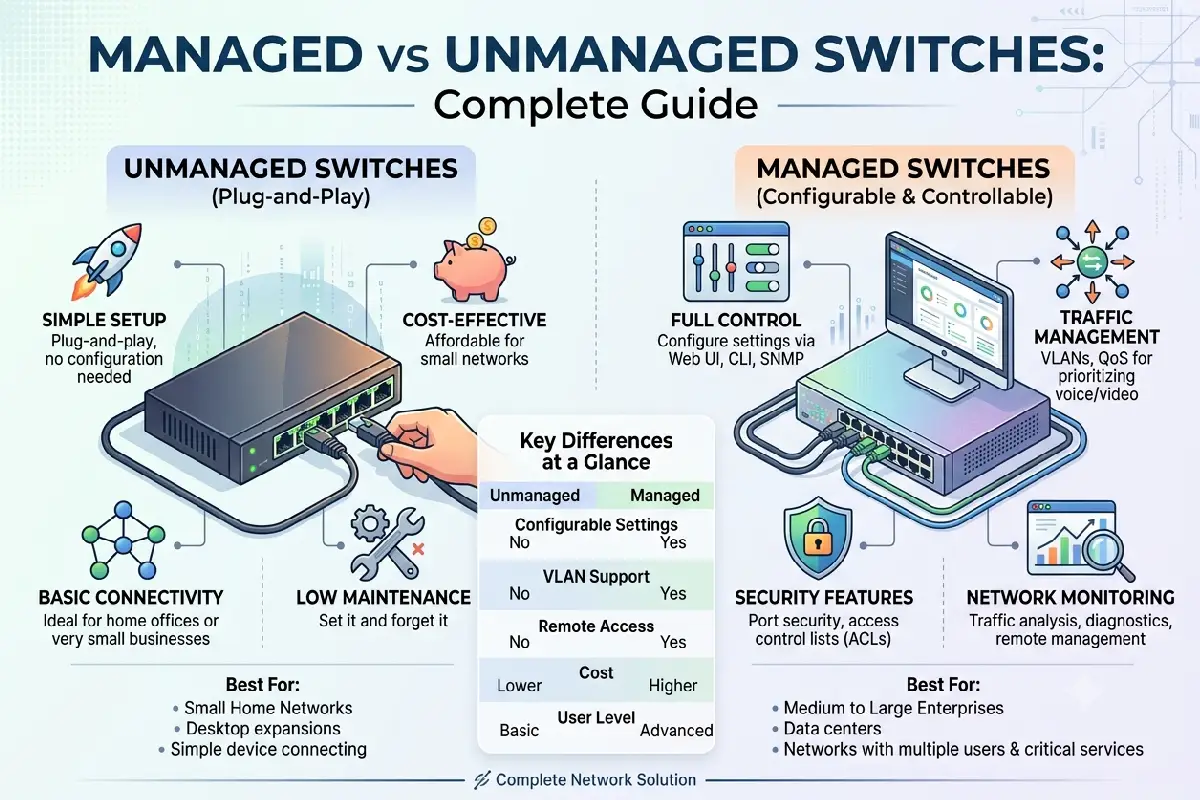
Segmentation isolates IoT devices into separate network zones.
Advantages include:
- Improved security
- Easier management
- Reduced attack surface
- Better traffic control
For example:
- Smart cameras on one VLAN
- Employee devices on another
- Guest devices on separate access
Edge Networking in IoT Systems
Edge networking is among the most important networking developments of 2026.
Why Edge Computing Matters
Many IoT applications require near-instant responses.
Examples:
- Security systems
- Autonomous robots
- Smart manufacturing
- Healthcare monitoring
Sending data to distant cloud servers introduces delays.
Edge networking solves this problem.
Cloud vs Edge Networking
| Factor | Cloud Networking | Edge Networking |
| Latency | Higher | Lower |
| Bandwidth Usage | High | Reduced |
| Response Time | Moderate | Fast |
| Privacy | Moderate | Better |
| Scalability | High | High |
Real-World Example
A smart factory with 10,000 sensors generates terabytes of data daily.
Without edge processing:
- Massive cloud costs
- Increased latency
- Network congestion
With edge networking:
- Local data processing
- Faster automation decisions
- Lower cloud expenses
Networking Techniques for Smart Homes
Smart homes continue to drive consumer IoT adoption.
A modern smart home may include:
- Smart lights
- Cameras
- Smart locks
- Thermostats
- Appliances
- Voice assistants
Proper networking is essential for reliability.
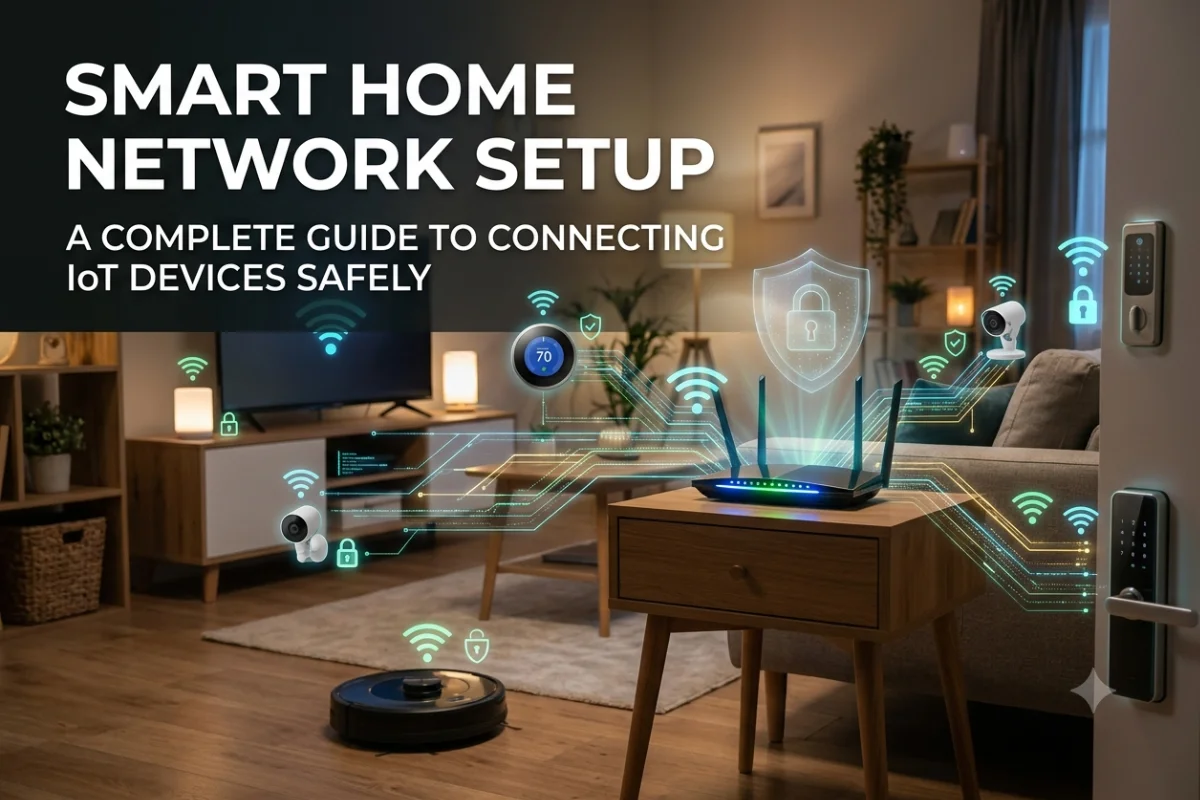
Recommended Smart Home Network Design
Primary Router
Handles internet access and traffic management.
Mesh Wi-Fi System
Ensures full-home coverage.
IoT Device Network
Dedicated network segment for smart devices.
Security Layer
- WPA3 encryption
- Device authentication
- Firewall protection
Smart Home Networking Comparison
| Technology | Range | Speed | Power Usage |
| Wi-Fi 7 | High | Very High | High |
| Zigbee | Medium | Moderate | Very Low |
| Z-Wave | Medium | Moderate | Very Low |
| Thread | Medium | High | Low |
| Bluetooth LE | Short | Moderate | Very Low |
Smart Office Networking Setup Guide
Modern offices rely heavily on connected technologies.
Examples include:
- Smart meeting rooms
- Occupancy sensors
- Smart lighting
- Environmental monitoring
- Access control systems
Essential Components
Enterprise Wi-Fi 7
Supports high device density.
SD-WAN
Optimizes connectivity across multiple locations.
Network Segmentation
Separates:
- Employees
- Guests
- IoT devices
- Critical systems
Edge Gateways
Enable local processing for office automation.
Sample Smart Office Architecture
| Layer | Technology |
| Access Layer | Wi-Fi 7 |
| IoT Layer | Zigbee, Thread |
| Security Layer | Zero Trust |
| Processing Layer | Edge Gateway |
| Analytics Layer | AI Platform |
| Management Layer | Cloud Dashboard |
Security Challenges in Smart Networking & IoT
Security remains the largest concern for IoT deployments.
Common threats include:
- Device hijacking
- Botnet attacks
- Data theft
- Credential compromise
- Ransomware
Best Security Practices
Zero Trust Architecture
Never automatically trust any device.
Multi-Factor Authentication
Protect administrative access.
Continuous Monitoring
Detect unusual activity in real time.
Firmware Updates
Patch vulnerabilities quickly.
Device Segmentation
Limit lateral movement during attacks.
Smart Networking Technologies Driving 2026
Several innovations are reshaping IoT networking.
Wi-Fi 7
Key benefits:
- Multi-gigabit speeds
- Lower latency
- Better congestion handling
5G Advanced
Supports:
- Massive IoT deployments
- Industrial automation
- Smart cities
Thread Protocol
Thread is becoming increasingly popular because it provides:
- Self-healing mesh networking
- Low power consumption
- Enhanced reliability
AI Networking Platforms
AI-powered systems automate:
- Troubleshooting
- Security analysis
- Performance optimization
Smart Networking Market Trends (2026)
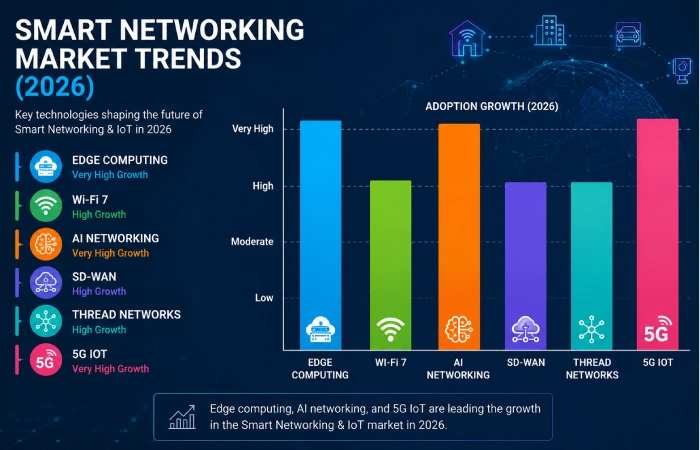
Adoption Trends
| Technology | Adoption Growth (2026) |
| Edge Computing | Very High |
| Wi-Fi 7 | High |
| AI Networking | Very High |
| SD-WAN | High |
| Thread Networks | High |
| 5G IoT | Very High |
Trend Analysis
Edge networking and AI-powered network automation is currently growing the fastest of all network sectors due to real-time processing demands and demands for network automation.
Future of Smart Networking & IoT
Over the next decade, networks will become increasingly autonomous.
Expected developments include:
- AI-managed self-healing networks
- Predictive cybersecurity systems
- Edge AI processing
- Fully autonomous smart buildings
- Massive industrial IoT ecosystems
- Integrated digital twins
The distinction between networking and computing will continue to blur as intelligence moves closer to connected devices.
Secure your IoT with our network security techniques guide.
Expert Insights (E-E-A-T Section)
Experience
IoT enterprises that operate at a massive scale know better than anything that network architecture determines success. Your IoT project is only as successful as the network that backs it. The network that cannot offer reliable scalability or security renders the smartest devices worthless,” wrote Sriranjan in.
For homes, you’ll use mesh networking and segmentation, while SD-WAN, edge gateways and network monitoring are most advantageous for smart offices.
Expertise
Modern IoT networking requires knowledge of:
- Wireless communication protocols
- Network security
- Edge computing
- Cloud integration
- AI-driven automation
Successful deployments balance performance, security, and operational simplicity.
Authoritativeness
Industry leaders increasingly prioritize:
- Zero Trust security
- Edge computing
- AI network management
- Wi-Fi 7 deployment
- 5G integration
These technologies are becoming standard components of enterprise networking strategies.
Trustworthiness
Reliable smart networking depends on:
- Regular security audits
- Firmware management
- Network monitoring
- Vendor transparency
- Industry-standard encryption
Organizations that prioritize these practices experience fewer outages and security incidents.
Frequently Asked Questions
What is smart networking in IoT?
Smart networking uses automation, AI, and intelligent traffic management to improve communication between connected IoT devices.
Why is edge networking important?
Edge networking brings data nearer to connected devices so it doesn’t all travel back and forth to the cloud to reduce latancy
What’s the best technology to connect smart home devices?
Right now, a Wi-Fi 7, Thread and mesh networking blend is likely the smartest choice-besting the competition at the combination of performance, coverage, and connectivity
How do AIs benefit the network?
AI technology monitors and manages network traffic intelligently, proactively forecasting and preventing failures, identifying threats to security and reducing waste in performance
What’s the biggest obstacle facing IoT connectivity?
Securing the devices connected to the IoT is the main hurdle.
Final Thoughts
Smart Networking and Internet of Things are becoming parts of our modern digital world. As we have more devices connected to the internet at home in the office in industries and in cities we need good networking technologies to make sure everything works well and is safe.
Companies that use Artificial Intelligence for networking, edge computing, Wi-Fi 7 SD-WAN and Zero Trust security will be in the best position to handle the growth of Internet of Things in the future. Whether we are making a home or setting up a big Internet of Things system for a company using modern networking techniques now will help us have a better future that is more connected, efficient and secure. Internet of Things and Smart Networking will be very important, for this.