
Last Updated: September 21, 2026
There is nothing easier today than transforming your house by installing remote light switches without changing all the light fixtures in your home. Whether you dream about controlling the lighting from your sofa, automating the processes around your house, or giving the opportunity to elderly people to control the lighting system, remote light switches are the best choice.
By 2026, remote light switches have become incredibly intelligent, with most brands having the ability to use Wi-Fi, Bluetooth, Zigbee, Z-Wave, or RF technologies for controlling light bulbs by means of smartphones, voice assistance, remote controls, or schedules of automation.
This guide is here to explain all the essential aspects regarding remote light switches, such as their functioning, types, installation, and whether it would be better to purchase a remote switch or a smart bulb.
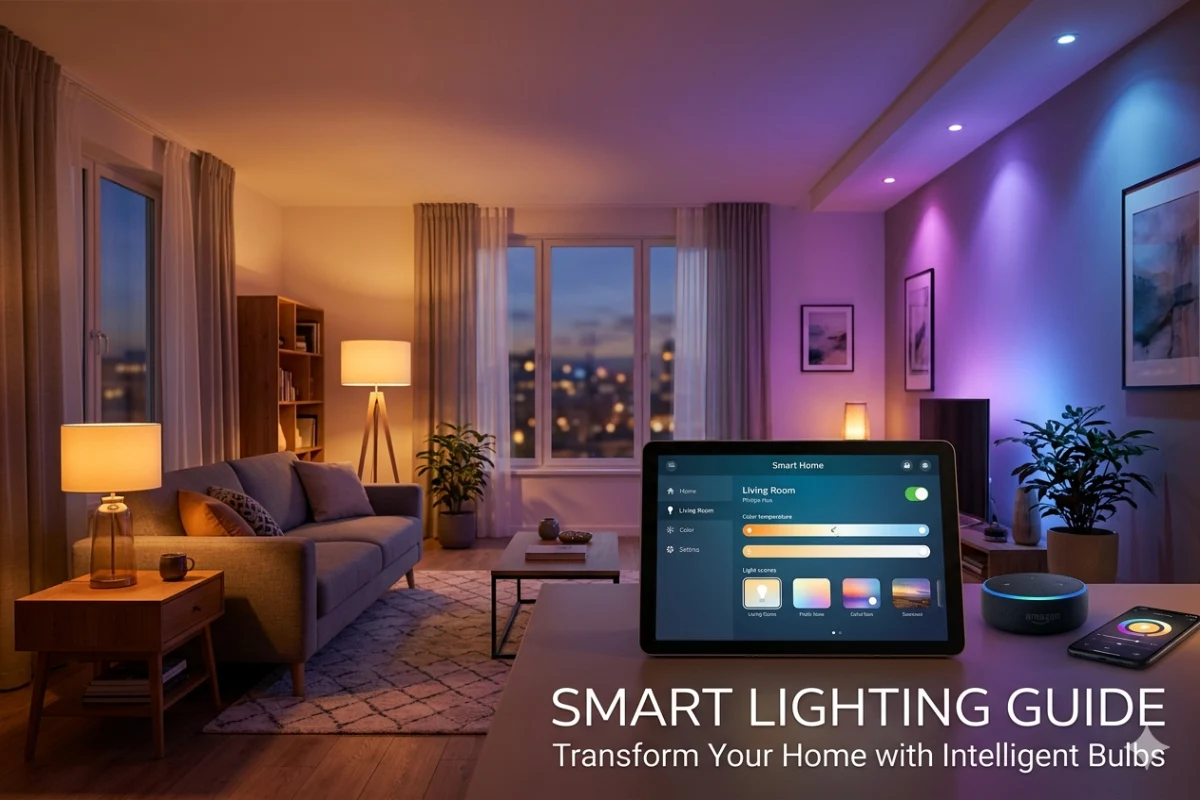
Remote light switch from our smart lighting guide.
What Is a Remote Light Switch?
Remote light switches refer to wall light switches or wireless controllers that enable you to turn the lights on or off without physically operating the light switch. This depends on the type of remote light switch, and it gives you the ability to control lights with:
- A handheld remote
- Smartphone app
- Voice assistants
- Motion sensors
- Smart home automation
- Wireless wall buttons
Unlike ordinary light switches which require people to move around to reach the wall light switch, remote light switches give you the convenience of controlling lights from anywhere.
Most of the remote light switches operate using Wi-Fi networks or RF communication.
How Remote Light Switches Operate
Different models operate using different communication technologies.
| Technology | Range | Internet Required | Best For |
| Wi-Fi | Unlimited (via internet) | Yes | Smart homes |
| RF | 50–300 feet | No | Simple wireless control |
| Bluetooth | 30–100 feet | No | Single-room use |
| Zigbee | Whole-home mesh | Hub Required | Smart automation |
| Z-Wave | Whole-home mesh | Hub Required | Large smart homes |
The vast majority of intelligent remote light switches work as replacements for your current wall switches and plug straight into your electricity supply. After installing a remote light switch, you will control it through your phone or a remote without wires.
Advantages of Remote Light Switches
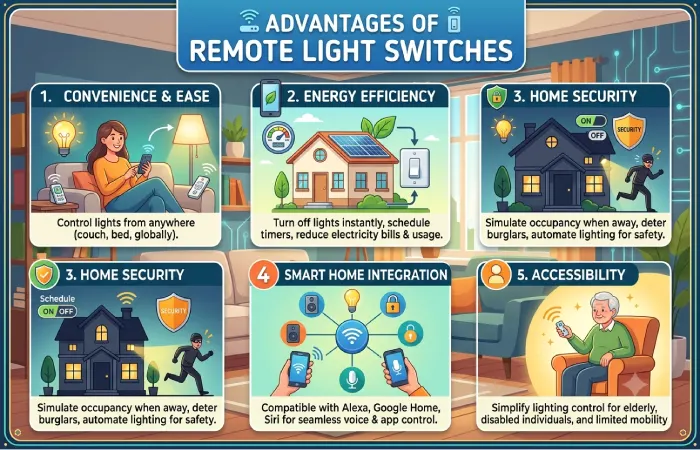
Remote light switches do not offer just the convenience of operation.
They allow you to get rid of walking across your apartment to turn lights on and off. Remote lighting works well in bedrooms, staircases, garages, patios, and exterior lighting.
Also, homeowners value the savings that come from remote-controlled lights because it is easier to make sure that no lights remain on by accident.
Remote lighting is invaluable for older people or people with mobility problems.
Families also benefit from enhanced security because scheduled lighting creates the appearance that someone is home while they’re away.
Some additional advantages include:
- Easier nighttime lighting
- Vacation scheduling
- Voice control
- Smart home automation
- Scene creation
- Timer settings
- Lower electricity waste
- Better home security
Best Wi-Fi Remote Light Switches
Wi-Fi remote switches are currently the most popular choice because they don’t require a dedicated hub in many cases.
They connect directly to your home’s wireless network, allowing remote control through a mobile app from anywhere with internet access.
TP-Link Kasa Smart Switch
One of the easiest smart switches to install.
Features include:
- No hub required
- Alexa compatibility
- Google Assistant support
- Scheduling
- Timers
- Energy monitoring (selected models)
Ideal for beginners.
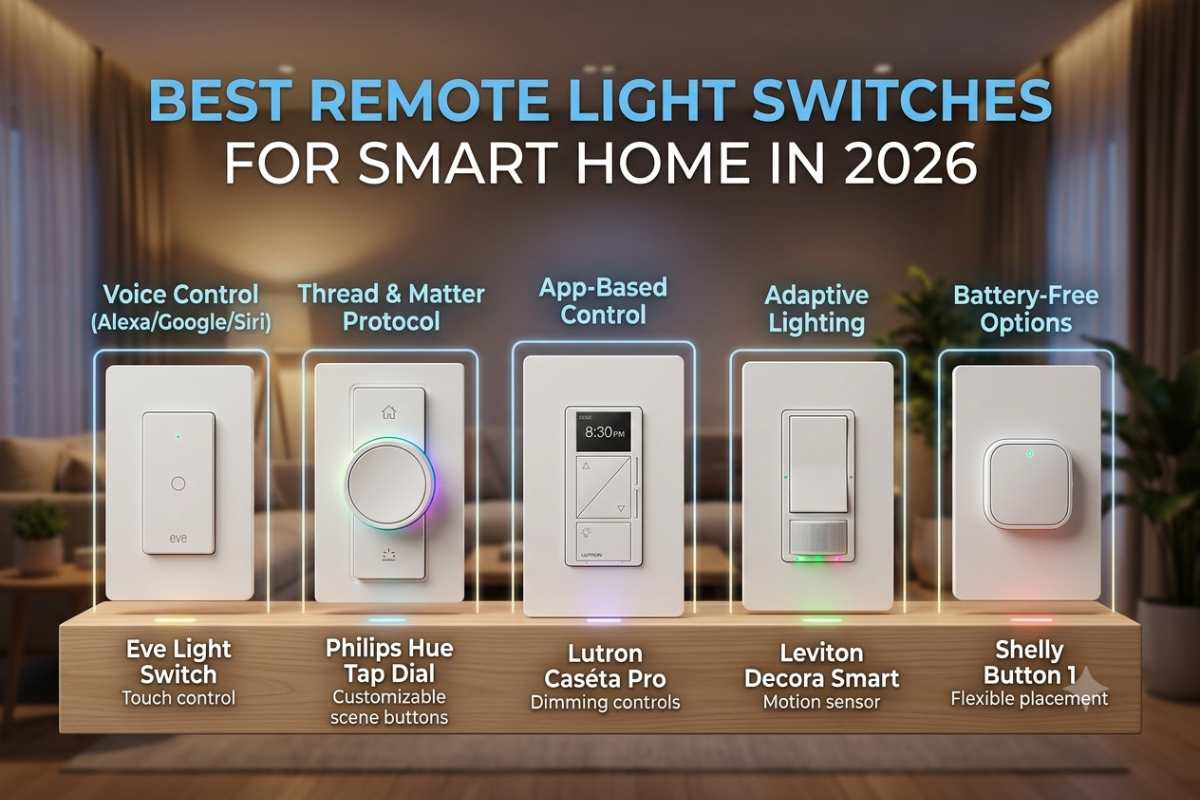
Leviton Decora Smart Switch
Leviton’s Decora series offers premium features suitable for larger homes.
Highlights include:
- Reliable Wi-Fi connection
- Apple Home support
- Voice control
- Smart scheduling
- High build quality
It works particularly well in homes with multiple smart devices.
GE Cync Smart Switch
GE Cync switches combine affordability with reliable performance.
Benefits include:
- Quick installation
- App control
- Voice assistant compatibility
- Group lighting control
- Scene creation
They’re a great option for upgrading older homes.
Meross Smart Light Switch
Meross switches have become increasingly popular because of their affordable pricing.
Features include:
- Fast setup
- Wi-Fi control
- Alexa support
- Google Home integration
- Apple HomeKit support (select models)
The mobile app is beginner-friendly and supports automation routines.
Amazon Basics Smart Switch
Amazon’s own smart switch integrates seamlessly with Alexa-enabled devices.
Advantages include:
- Simple setup
- Voice control
- Reliable scheduling
- Budget-friendly pricing
This option works particularly well in Alexa-powered homes.
Comparison of Popular Wi-Fi Remote Light Switches
| Brand | Hub Required | Voice Control | Mobile App | Scheduling |
| TP-Link Kasa | No | Yes | Yes | Yes |
| Leviton | No | Yes | Yes | Yes |
| GE Cync | No | Yes | Yes | Yes |
| Meross | No | Yes | Yes | Yes |
| Amazon Basics | No | Alexa | Yes | Yes |
Wi-Fi switches are highly recommended to people who want remote access and home automation capabilities without installing a separate hub.
RF Remote Light Switches
RF (Radio Frequency) wireless switches still prove to be very popular among consumers that don’t need internet connection and mobile applications.
Unlike Wi-Fi devices, RF devices communicate directly with a wireless handheld controller.
These switches are popular in:
- Garages
- Workshops
- Outdoor sheds
- Basements
- Rental properties
- Vacation cabins
One major advantage is that they continue working even when your internet service goes offline.
Advantages of RF Switches
RF technology offers dependable wireless control with minimal setup.
Benefits include:
- No Wi-Fi required
- Simple installation
- Reliable signal
- Low maintenance
- Affordable cost
- Long battery life
- Instant response
Many RF systems also allow multiple remotes to control the same light.
Limitations
RF switches typically lack advanced smart features such as:
- Voice assistants
- Smartphone apps
- Automation routines
- Remote internet access
However, they’re still an excellent solution for users seeking dependable wireless lighting without additional complexity.
Control alexa light bulbs wirelessly.
Remote Light Switch Installation Guide
Installation of a remote light switch can be considered easy when you install it in place of an already existing wall switch. Nonetheless, electrical safety considerations must always be made first.
Before doing anything else, ensure that the power supply to the circuit in question has been switched off at your home’s breaker box. Check the absence of electricity using a voltage tester.
Start by taking out the old switch by removing the cover plate and withdrawing the switch from the electrical box. You should make observations of the wires involved or take a picture to use as a guide. The smart switch connects with the line wire, load wire, ground wire, and at times a neutral wire.
Having ensured that everything is in order, insert the new switch in the electrical box and put on the face plate. In most cases, Wi-Fi switches must be paired using the mobile application while the RF switches should be paired with a handheld remote through simple button pressing procedures.
If your home does not have a neutral wire or if you do not have experience working with electricity, calling an electrician is the best choice. This will help to ensure correct installation and adherence to electrical codes in your locality.
Installation Checklist
| Step | Description |
| Turn off breaker | Prevent electrical shock |
| Remove old switch | Disconnect wiring carefully |
| Connect new switch | Follow wiring instructions |
| Secure switch | Mount inside electrical box |
| Restore power | Test switch operation |
| Pair device | Connect to app or remote |
Many homeowners can complete the installation in under an hour, though installation time varies depending on the home’s wiring.
Remote Light Switch vs Smart Bulb
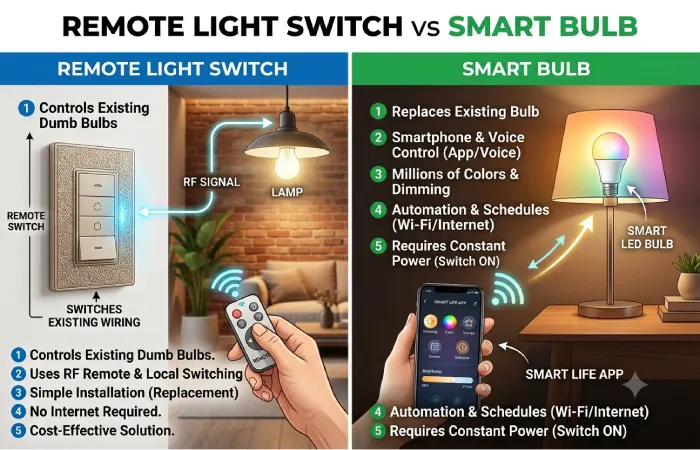
One frequent question for homeowners is whether to use remote-controlled switches or just to switch to smart bulbs.
It all depends on your lighting requirements and the kind of fixtures you have at home.
The remote controls the circuit directly, meaning that you can turn on any regular light bulbs that have been wired using this switch. In addition, your guests will be able to continue using the wall switch as usual. As the switch regulates power to many different fixtures, it makes it the best option for use in rooms having more than one recessed or ceiling light fixture.
Smart bulbs use the intelligence embedded into each individual light bulb. The capabilities include brightness adjustment, control of color temperature, and a huge palette of colors. On the downside, they can function only if the wall switch is always in the ON state; once switched off, the capabilities are not available until power restoration.
Smart bulbs are more suitable for those who have ornamental lights at home or want color customization. If one needs light coverage for an entire room, the choice will be remote light switches since it is easier and more economical.
Comparison Table
| Feature | Remote Light Switch | Smart Bulb |
| Controls multiple lights | Yes | No |
| Requires bulb replacement | No | Yes |
| Smart scheduling | Yes | Yes |
| Voice assistant support | Yes | Yes |
| Color changing | No | Yes |
| Dimming support | Selected models | Most models |
| Works with regular bulbs | Yes | No |
For many smart homes, homeowners incorporate the two technologies by using remote switches for their general lights and smart bulbs for accent lighting.
Perfect for smart lighting for bedroom convenience.
The Proper Remote Light Switch to Buy
There are many things to think about when deciding on the best remote light switch to buy in your house. The type of existing wiring in your house, as well as the smart ecosystem that you have set up and the degree of automation you desire, should be considered.
It is also important to consider whether you need internet-enabled remote access or just basic RF remote control. The Wi-Fi switches are best for homeowners who prefer remote app control no matter where they are located, while RF is a great choice for basic functionality that does not involve an internet connection.
Take electrical compatibility into account as well. There are some switches that require a neutral wire and other that do not have this requirement at all. If you plan to use dimmable lighting, make sure that the switch and the lamps are dimmable.
Lastly, some of the factors you should consider include scheduling, timer options, scene management, and power monitoring if you wish to enjoy a more sophisticated smart home experience.
Conclusion
It is now clear that remote light switches are a vital part of any modern smart home system, providing a convenient way of improving efficiency, accessibility, and ease of use. Irrespective of whether you opt for Wi-Fi-enabled switches with voice controls and automatic features or wireless remote lights, you will find that they are well worth the investment.
In general, in the year 2026, the wireless internet protocol (Wi-Fi) remote light switches would represent an optimal combination of options, as users can remotely switch on and off the lights using their smartphone apps, voice assistants, schedules, and routines of automation.
However, the choice of the radio frequency (RF) light switches would be justified when simplicity and reliability are key issues. Before choosing any remote light switch, consider assessing such factors as the wiring of the building, the compatibility of the switch with your favorite smart home platform, and the type of the lights to be controlled.